Coordinating AHA Training for Your Chicago Healthcare Team
Keeping healthcare employees current on required certifications can become complicated when a team includes different roles, schedules and certification dates. Citywide CPR helps Chicago healthcare organizations coordinate American Heart Association BLS, ACLS and PALS training for employees based on their individual responsibilities and the requirements of their organization.
For organizations interested in bringing training directly to their workplace, Citywide CPR offers onsite BLS, ACLS and PALS training options that can be discussed with the onsite training team. Course availability, format and scheduling depend on the organization’s needs and should be confirmed when requesting training.
Citywide CPR is an American Heart Association Training Center offering certification and renewal options for healthcare professionals. For organizations that prefer to coordinate training at their own facility, the onsite process can help centralize the conversation around employee roles, course requirements, group scheduling and location needs.
Which AHA Certification Does Your Healthcare Team Need?
Not every healthcare employee needs BLS, ACLS and PALS. The appropriate certification depends on the employee’s role, clinical responsibilities, employer requirements and, where applicable, school or credentialing requirements.
Understanding the distinction between the three courses is an important first step before arranging group training.
BLS for Healthcare Professionals
American Heart Association BLS provides foundational resuscitation training for healthcare professionals and others whose roles require healthcare-level Basic Life Support skills.
A Chicago healthcare organization may have employees who need BLS because of their clinical responsibilities, workplace policies or professional requirements. Nurses, physicians, EMTs, paramedics, respiratory therapists, medical assistants and other healthcare professionals may have different certification requirements depending on their roles.
For organizations coordinating BLS certification or renewal, Citywide CPR provides healthcare staff training options through both onsite solutions and individual Self-Guided Skills Sessions.
ACLS for Advanced Adult Cardiovascular Emergencies
American Heart Association ACLS is intended for healthcare professionals involved in responding to adult cardiovascular emergencies and other situations requiring advanced cardiovascular life support skills.
An organization may have nurses, physicians, paramedics, emergency department personnel or critical-care professionals who require ACLS while other employees only need BLS.
When arranging training for a larger team, identifying which employees actually require ACLS can help the organization request the appropriate course rather than treating every employee as needing the same certification.
PALS for Pediatric Emergency Care
American Heart Association PALS is designed for healthcare professionals involved in the assessment and management of critically ill or injured infants and children.
PALS may be relevant for pediatric healthcare teams, emergency personnel and other clinicians whose responsibilities involve pediatric emergencies. It should not automatically be assigned to every employee in a healthcare organization.
Citywide CPR offers AHA PALS certification and renewal options for eligible healthcare professionals, with course format and availability depending on the training arrangement.
How Citywide CPR Helps Chicago Healthcare Organizations Coordinate Training
A healthcare administrator or clinical educator typically needs to consider more than simply choosing a CPR course. The organization may need to determine which employees require BLS, ACLS or PALS, identify initial certifications versus renewals, coordinate schedules and decide whether employees should train individually or as a group.
Citywide CPR’s healthcare staff training program is designed to help organizations explore those options. The program includes individual training at CPR Verification Station™ learning centers as well as portable skills verification with RQI-P GO for organizations where bringing skills verification to the facility is more practical.
When requesting training, organizations can provide information such as the type of healthcare facility, approximate number of employees, certifications needed, employee schedules and preferred training location. Citywide CPR can then help determine which training solution is appropriate.
Onsite Instructor-Led Training for Chicago Healthcare Teams
For organizations that want employees trained together at their facility, Citywide CPR can coordinate instructor-led onsite group training where the applicable course and arrangement are available.
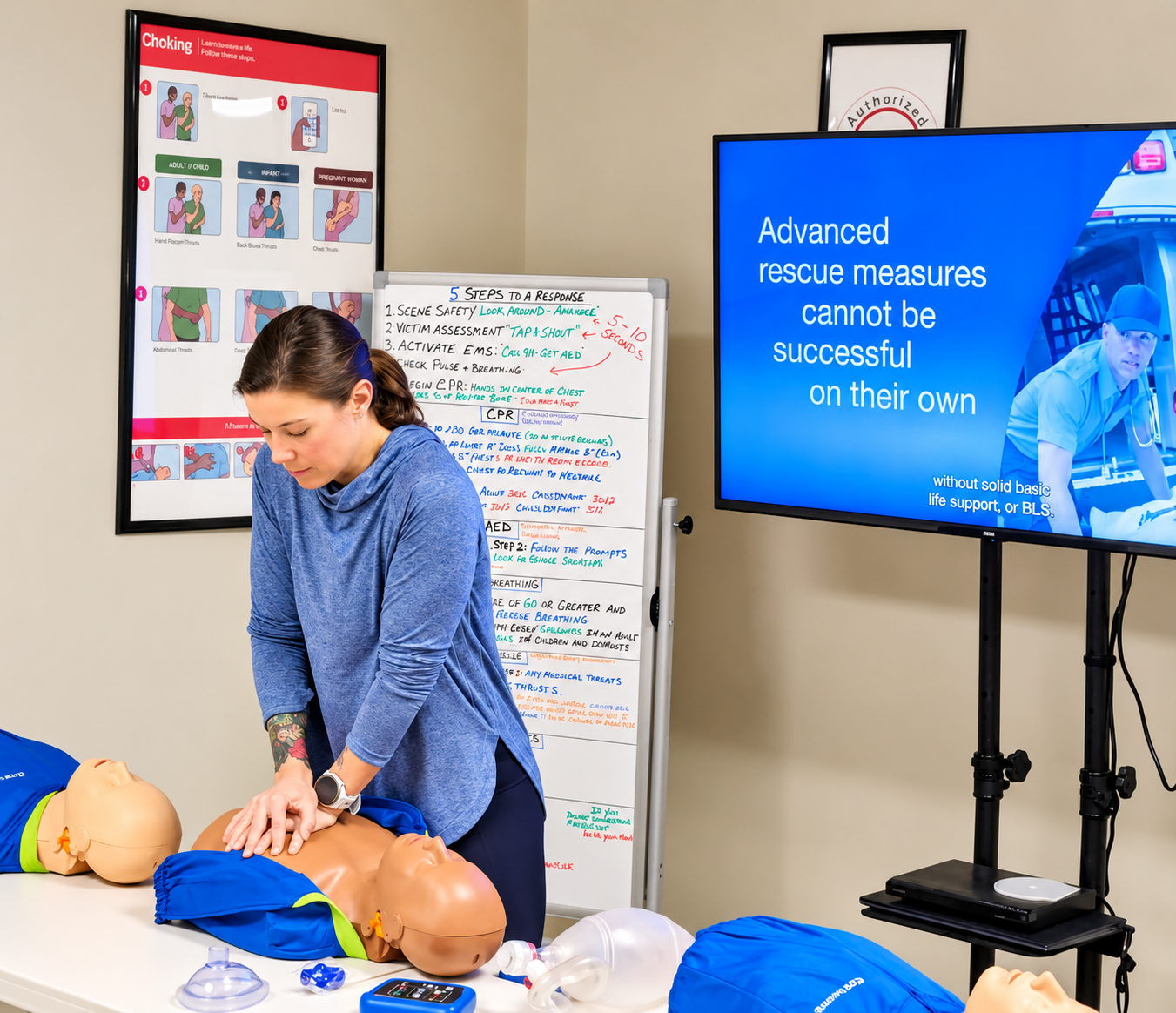
This approach can be useful when a healthcare organization wants a group session built around its workplace schedule. Instructor-led training provides demonstrations, guided instruction and hands-on practice in a group setting rather than requiring every employee to independently arrange an individual appointment.
Organizations can request information through the Citywide CPR onsite training request page. The request form allows organizations to provide information about the course type, approximate number of participants, training location and desired timing.
What Healthcare Organizations Should Have Ready
Before contacting Citywide CPR, it can help to gather a few basic details:
The organization should know approximately how many employees need training, which certifications they require, whether participants are completing initial certification or renewal, and whether the group needs BLS, ACLS, PALS or a combination.
It is also useful to identify whether employees can train together or whether different shifts require different arrangements. These details help the training team understand the organization’s needs before discussing available options.
Portable RQI-P GO Skills Verification for Healthcare Staff
Not every organization needs the same onsite training model. For eligible healthcare teams, Citywide CPR’s RQI-P GO solution provides a portable way to bring CPR skills verification directly to the organization’s facility.
Employees complete the applicable online learning and then use the portable RQI-P GO system to practice and perform required hands-on skills with real-time feedback. Citywide CPR describes RQI-P GO as a portable skills-verification solution for healthcare organizations coordinating BLS, ACLS and PALS certification.
This can be particularly useful for organizations with employees working different shifts or for facilities where sending multiple employees away from the workplace creates scheduling challenges.
RQI-P GO should not be confused with a traditional instructor-led classroom course. It is a portable skills-verification solution, and organizations should discuss their specific certification requirements and setup with Citywide CPR before arranging training.
Onsite Training vs. Individual Self-Guided Skills Sessions
Another option is to have employees complete their certification individually at a Citywide CPR CPR Verification Station™ learning center.
With this approach, employees can complete the applicable AHA online coursework and then schedule their own Self-Guided Skills Session. This can make sense when employees have different schedules, different certification expiration dates or different course requirements.
Citywide CPR’s Self-Guided CPR Training information explains how the process works for eligible courses. Employees complete the applicable online learning and then attend their scheduled hands-on skills session using the CPR skills verification system.
Chicago healthcare organizations can also review Citywide CPR’s Chicago training locations when determining whether individual employee appointments may be a better fit than coordinating a group session.
Choosing the Right Training Approach for Your Team
There is no single training format that is best for every Chicago healthcare organization. The right option depends on the number of employees, certification requirements, schedules and operational needs.
An organization with a group of employees who can train together may want to ask about instructor-led onsite training. A healthcare team that primarily needs portable BLS, ACLS or PALS skills verification may want to discuss RQI-P GO. Employees with different schedules or renewal dates may find individual Self-Guided Skills Sessions more practical.
The important step is to identify the certification requirements first and then discuss the available training format with Citywide CPR.
Consider Employee Roles
Start by separating employees according to the certification their role requires. One group may need BLS, while another may require ACLS or PALS.
Do not assume that every clinical employee needs all three certifications. The employer, clinical program or applicable professional requirements should determine which certification each employee needs.
Consider Initial Certification and Renewal
Your team may include employees completing certification for the first time and others renewing existing credentials. Those employees may not necessarily need the same course pathway.
Identifying those differences before scheduling can make the training request more precise and help avoid registering employees for an inappropriate course.
Consider Your Scheduling Needs
Chicago healthcare teams often operate across multiple shifts and departments. If employees cannot attend the same session, individual Self-Guided Skills Sessions or an appropriate portable training arrangement may be worth discussing.
Citywide CPR’s healthcare staff training page allows organizations to provide information about their team and training needs so the appropriate option can be explored.
Serving Healthcare Organizations Across Chicago
Citywide CPR’s Chicago presence includes training locations serving healthcare professionals and students in communities such as The Loop, River North, Hyde Park and North Center. Organizations can review Chicago BLS, ACLS and PALS training locations when individual employee appointments make more sense than group training.
For healthcare organizations in Downtown Chicago, River North, the West Loop and surrounding business and medical communities, onsite training can provide another way to coordinate certification without requiring every employee to independently find a course.
The exact training arrangement should be confirmed with Citywide CPR based on the organization’s location, course requirements, group needs and scheduling preferences.
Frequently Asked Questions About Healthcare Staff Training in Chicago
Can Citywide CPR provide onsite BLS training for Chicago healthcare teams?
Yes. Citywide CPR offers onsite training options for organizations and lists BLS among its available onsite course options. Organizations can submit their training needs through the onsite training request form and provide information about their location, approximate number of participants and preferred course.
Can a Chicago healthcare organization arrange ACLS or PALS training for employees?
Citywide CPR provides AHA ACLS and PALS certification and renewal options for healthcare professionals. Whether a particular course and format can be arranged onsite depends on the organization’s requirements and the training arrangement, so employers should confirm the details with Citywide CPR.
Do all healthcare employees need BLS, ACLS and PALS?
No. Certification requirements vary according to the employee’s role, responsibilities and employer or credentialing requirements. A healthcare organization should determine which employees require each certification before arranging group training.
What is RQI-P GO?
RQI-P GO is Citywide CPR’s portable CPR skills-verification solution. For eligible healthcare employees, the system can bring hands-on skills verification directly to the organization’s facility after the applicable online learning has been completed. The system provides real-time feedback during the skills experience.
Is RQI-P GO the same as instructor-led onsite training?
No. Instructor-led onsite training involves an instructor providing group instruction and guided hands-on training. RQI-P GO is a portable skills-verification solution that uses technology to guide participants through applicable hands-on skills and provide real-time feedback.
Can employees train individually instead of attending a group class?
Yes, when the applicable course and location are available. Employees can complete their required online learning and schedule Self-Guided Skills Sessions at participating Citywide CPR CPR Verification Station™ learning centers. This may be useful when employees have different shifts or certification dates.
How should a Chicago healthcare organization request group training?
Start by providing the organization’s location, approximate number of employees, certifications needed, employee roles and scheduling needs. The easiest next step is to complete the Citywide CPR onsite training request form so the training team can review the request and discuss the appropriate arrangement.
When is the AHA eCard processed?
The official AHA eCard is processed the same day after successful completion of course requirements and the skills session.
Arrange BLS, ACLS or PALS Training for Your Chicago Healthcare Team
Coordinating AHA certification for a healthcare team does not have to start with finding separate courses for every employee. Begin by identifying which team members need BLS, ACLS or PALS, whether they are completing initial certification or renewal, and whether your organization would benefit from group onsite training, portable RQI-P GO skills verification or individual Self-Guided Skills Sessions.
For Chicago healthcare organizations ready to discuss their requirements, request onsite BLS, ACLS or PALS training from Citywide CPR. You can also explore healthcare staff BLS, ACLS and PALS training options if you are comparing individual and portable solutions for your team.
Citywide CPR can help your organization determine the appropriate training pathway based on your employees, certification needs, location and scheduling requirements.