Dental professionals work in clinical environments where recognizing an emergency and responding quickly can matter. For dental hygienists, dental assistants, dental students, and other clinical staff, the right CPR or BLS credential may be an important part of employment, education, or professional requirements.
The first step is identifying exactly what certification your employer, dental program, or applicable professional requirements call for. Some dental professionals may need American Heart Association BLS Provider certification, while others may be required to maintain a different CPR or AED credential. Citywide CPR is an American Heart Association Training Center offering BLS certification and renewal through flexible Online + Skills and Skills Only pathways.
Do Dental Hygienists and Dental Assistants Need BLS Certification?
There is not one universal certification requirement for every dental hygienist or dental assistant. Requirements can vary based on professional role, employer policies, educational programs, applicable regulations, and other circumstances. Citywide CPR’s existing guidance for dental offices similarly recommends confirming the exact credential required before registering rather than assuming that every member of a dental team needs the same course.
If your employer, dental school, or clinical program specifically says you need American Heart Association BLS, AHA BLS Provider, or healthcare-provider BLS, make sure you select the corresponding BLS course rather than substituting a general workplace CPR course without confirmation.
For dental professionals who need AHA BLS, Citywide CPR provides American Heart Association BLS certification and renewal options through participating locations nationwide.
Why Is BLS Training Important in Dental Offices?
Dental offices are healthcare environments, and patients can experience unexpected medical emergencies during an appointment. A dental team may need to recognize a problem, activate the appropriate emergency response, begin CPR, use an AED when available, and provide effective care while additional help is being obtained.
BLS training focuses on practical emergency-response skills such as high-quality CPR, AED use, ventilation, and coordinated response. These skills are relevant to healthcare professionals because an emergency may require more than simply knowing how to call for help.
For dental teams, maintaining appropriate BLS training can also help staff stay familiar with the physical skills they may need to perform during a cardiac or respiratory emergency.
What CPR Certification Do Dental Professionals Need?
The appropriate credential depends on what the individual is required to maintain. A dental hygienist may have different requirements from a dental assistant, dental student, dentist, or non-clinical office employee.
Before registering, check the wording provided by your employer, school, credentialing organization, or other applicable authority. If the requirement specifically calls for AHA BLS Provider certification, choose an AHA BLS pathway rather than assuming that any CPR certification will meet the requirement.
AHA BLS Provider Certification vs. General CPR AED Training
AHA BLS and general CPR/AED courses are not automatically interchangeable.
BLS is designed for healthcare professionals and other personnel who need healthcare-focused resuscitation training. It includes CPR and AED concepts while addressing the coordinated response expected in a healthcare setting.
A general CPR/AED course may be appropriate for people who need basic emergency-response training but do not have a healthcare-provider BLS requirement.
If your dental office documentation says “AHA BLS,” “American Heart Association BLS,” or “BLS Provider,” pay attention to that exact wording when selecting your course.
BLS Requirements for Dental Hygiene and Dental Assisting Students
Dental hygiene and dental assisting students should check their program’s requirements before registering. Educational programs may specify the certification provider, course type, completion format, or documentation they require before clinical participation.
Do not assume that because a course is called “CPR certification” it automatically satisfies a school requirement for AHA BLS.
If your program requires AHA BLS, Citywide CPR’s BLS certification options provide a starting point for selecting the appropriate pathway.
Can Dental Hygienists Complete BLS Certification Online?
Applicable AHA HeartCode BLS training allows the educational portion to be completed online, but online coursework alone does not complete a blended-learning certification pathway when hands-on skills are required.
Citywide CPR’s BLS pathway combines the applicable HeartCode BLS online course with an in-person Self-Guided Skills Session. This can be useful for dental professionals who need to complete coursework around patient schedules, work responsibilities, or school commitments.
If you have already completed the applicable HeartCode BLS online course, you may instead be eligible for the Skills Only option. Citywide CPR explains the distinction between these pathways on its BLS Online + Skills page,
Complete Your AHA HeartCode BLS Online Course
For BLS Online + Skills, the first component is the applicable AHA HeartCode BLS online coursework. The online portion covers the educational material you need to complete before your corresponding hands-on skills session.
You can complete the online learning at your own pace before attending your scheduled skills appointment. This separates the educational component from the physical skills experience and can make the process easier to coordinate with a busy dental schedule.
If you have already completed the applicable HeartCode BLS course, review the BLS Skills Only option instead. Skills Only is intended for eligible participants who have the required online-course completion documentation.
Complete Your Required Hands-On BLS Skills Session
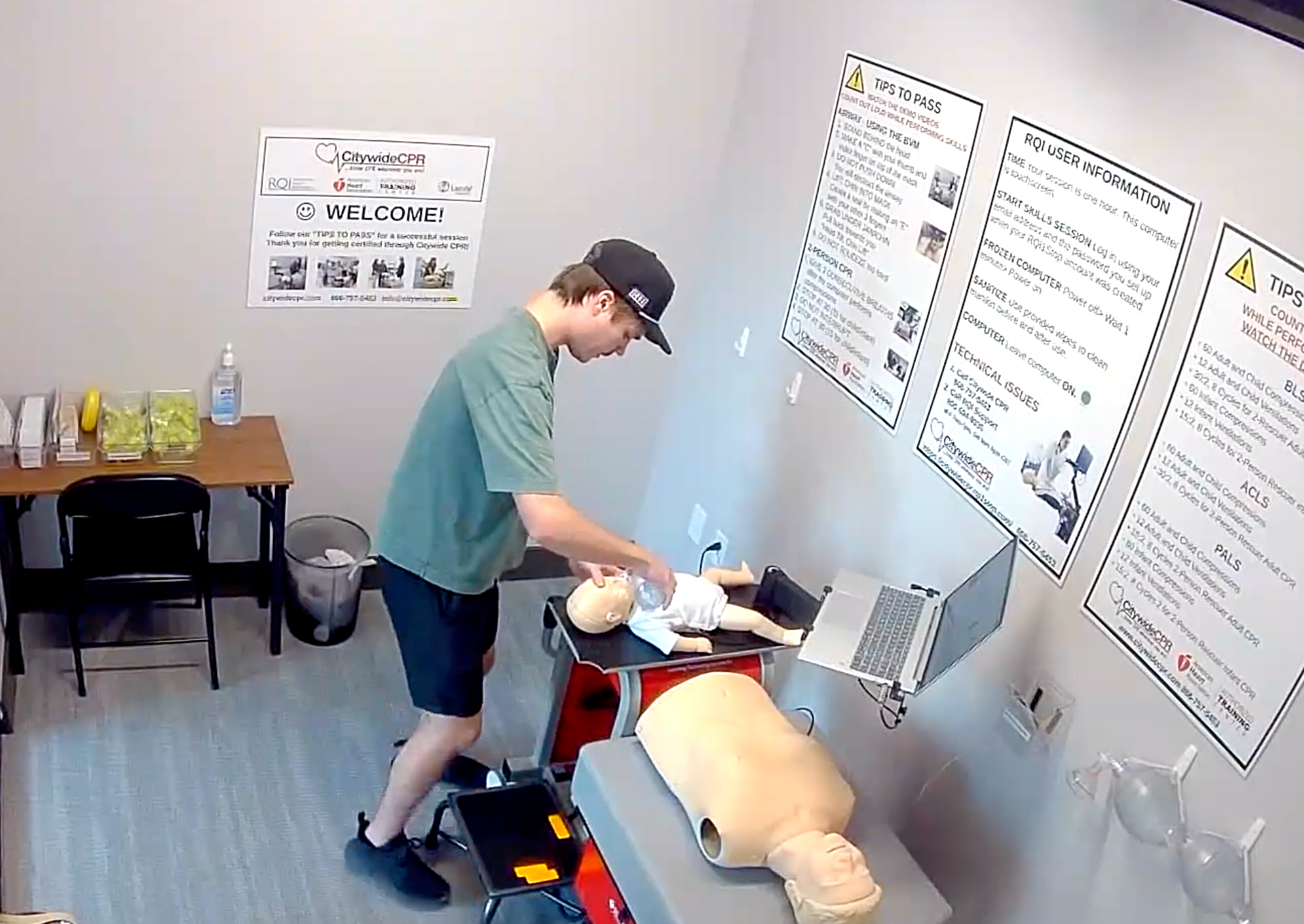
After the applicable online coursework is completed, the hands-on component takes place during an in-person Self-Guided Skills Session at a participating Citywide CPR CPR Verification Station.
The session allows you to physically practice and perform the required BLS skills using a Voice-Assisted Manikin (VAM). The technology provides guidance and real-time feedback as you work through the applicable skills.
Self-Guided does not mean online-only. You still attend a physical location and complete the required hands-on skills experience.
Self-Guided skills sessions typically take approximately 15–30 minutes, although the full certification process takes longer because the applicable online coursework and other course requirements must also be completed. Citywide CPR describes its Self-Guided Learning as a combination of online learning and hands-on skills verification.
What BLS Skills Do Dental Professionals Learn?
BLS training addresses the practical skills healthcare professionals may need when responding to a life-threatening emergency. Depending on the applicable course, this includes high-quality CPR, AED use, ventilation, and coordinated resuscitation skills.
For dental professionals, these skills are relevant because an emergency can develop unexpectedly while a patient is receiving care. Knowing how to recognize a serious emergency and begin an appropriate response can be an important part of clinical preparedness.
The hands-on portion is particularly important because BLS is not simply a knowledge-based course. Participants must successfully complete the required skills component of their selected pathway.
How Often Do Dental Hygienists and Dental Assistants Need BLS Renewal?
AHA BLS Provider eCards are generally valid for two years. However, the expiration date on your own credential should be the starting point for planning your renewal.
Dental professionals should also keep separate track of any employer, school, professional, or licensing requirements that apply to them. A BLS credential’s expiration period does not necessarily establish every other professional renewal deadline.
If your BLS credential is approaching expiration, review Citywide CPR’s BLS renewal information to determine which course components you may need. Depending on your previous coursework and the applicable pathway, you may need Online + Skills or may be eligible for Skills Only.
Starting the renewal process before your credential expires can also give you time to complete the online course, schedule your skills session, and provide updated documentation to your employer or school.
How Long Does BLS Certification Take?
The total time depends on the pathway you select and whether you have already completed the applicable online coursework.
With Online + Skills, you complete the HeartCode BLS online portion before attending the hands-on session. The Self-Guided skills appointment itself typically takes approximately 15–30 minutes, but that should not be confused with the total time required to complete BLS certification.
If you already have the appropriate HeartCode completion certificate and qualify for Skills Only, the remaining hands-on portion can be shorter because the online component has already been completed.
Planning ahead is especially useful for dental professionals who need documentation before starting employment, beginning a clinical program, or meeting an employer’s credentialing deadline.
Why Choose Citywide CPR for Dental Professional BLS Certification?
Citywide CPR is an American Heart Association Training Center offering BLS certification and renewal through participating locations nationwide. Dental professionals can choose an applicable Online + Skills or Skills Only pathway based on the coursework they have already completed.
The Self-Guided format is designed around a practical combination of online learning and in-person skills verification. At the skills session, participants use a Voice-Assisted Manikin with real-time feedback rather than attending a traditional instructor-led classroom for the hands-on portion.
For dental hygienists, dental assistants, and dental students balancing clinical responsibilities, work, or school, the ability to complete applicable coursework before attending the hands-on session can make certification easier to coordinate.
Citywide CPR also offers BLS training at locations nationwide, allowing dental professionals to look for a participating location that fits their needs.
After successful completion of course requirements and the skills session, the official American Heart Association eCard is processed the same day.
Find AHA BLS Certification or Renewal Near You
If you are a dental hygienist, dental assistant, dental student, or other dental professional who needs BLS certification, start by confirming exactly what credential your employer or educational program requires.
If you need both the online and hands-on components, review BLS Online + Skills. If you have already completed the applicable AHA HeartCode BLS online course and have the required completion documentation, review BLS Skills Only to determine whether that pathway is appropriate.
For dental professionals who need to renew an existing credential, check your current BLS eCard expiration date and review the BLS renewal information before registering. Then use Citywide CPR’s location finder to find a participating training location.
Whether you are preparing for dental school clinical requirements, starting a new dental position, or renewing an existing BLS credential, selecting the correct AHA course first can help you complete the certification process without taking a course that does not match your requirement.