ACLS Study Guide
Preparing for ACLS? Review the core concepts before class.
This resource provides an educational overview of concepts commonly taught during American Heart Association ACLS courses. It supplements, but does not replace, official AHA course materials.
Advanced Cardiovascular Life Support (ACLS) certification is designed for healthcare professionals who respond to cardiovascular emergencies and other life-threatening situations. ACLS builds upon Basic Life Support (BLS) by focusing on advanced assessment, team dynamics, rhythm recognition, airway management concepts, and evidence-based emergency care.
Whether you are becoming ACLS certified for the first time or renewing your certification, understanding what to expect can help you feel more confident before your course.
What Is ACLS?
ACLS builds upon BLS and prepares healthcare professionals to recognize and manage cardiovascular emergencies using current AHA educational principles.
Topics to Review
Review CPR, rhythm recognition, airway concepts, medications, team dynamics, and post-cardiac arrest care.
- High-quality CPR
- Adult cardiac arrest
- Cardiac rhythm recognition
- Bradycardia
- Airway management
- Defibrillation
- Synchronized cardioversion
- ACLS medications
- Post-cardiac arrest care
What Will You Learn?
During ACLS training, healthcare professionals review key concepts that support the recognition and management of cardiovascular emergencies.
- High-quality CPR
- Adult Cardiac Arrest
- Cardiac Rhythm Recognition
- High-quality CPR principles
- Bradycardia
- Tachycardia
- Airway Management
- Defibrillation
- Synchronized CardioversionSynchronized Cardioversion
- ACLS Medications
- Post-Cardiac Arrest Care
How to Prepare
Review BLS concepts, complete any required online learning, become familiar with common cardiac rhythms, review ACLS medications, and arrive prepared for your scheduled course.
- ACLS Rhythm Recognition Guide → Focus on practicing ECG rhythm interpretation and reviewing rhythm strips.
- ACLS Medications Guide → Focus on reviewing medication names, indications, and how they fit into ACLS education.
- Adult Cardiac Arrest Algorithm → Focus on understanding the overall flow of patient assessment and the algorithm's purpose rather than memorizing every step.
- ACLS Megacode Guide → Focus on reviewing teamwork, communication, and applying multiple ACLS concepts in simulated scenarios.
- Key Takeaways
- Review the core ACLS concepts before attending your course.
- Refresh your understanding of cardiac rhythms and emergency medications.
- Complete all required online learning before your scheduled skills session.
- Build confidence by arriving prepared and ready to apply ACLS concepts.
Frequently Asked Questions
The HeartCode ACLS eLearning course teaches the purpose and application of the ACLS algorithms. Focus on understanding how the algorithms are used during patient care rather than simply memorizing individual steps.
Yes. ECG rhythm recognition is an important part of the HeartCode ACLS eLearning course. Reviewing common cardiac rhythms before you begin can help you better understand the online course content and prepare for successful completion.
Yes. Becoming familiar with the medications discussed during ACLS education can help you better understand their purpose within emergency cardiovascular care. Your official American Heart Association course materials remain the primary reference.
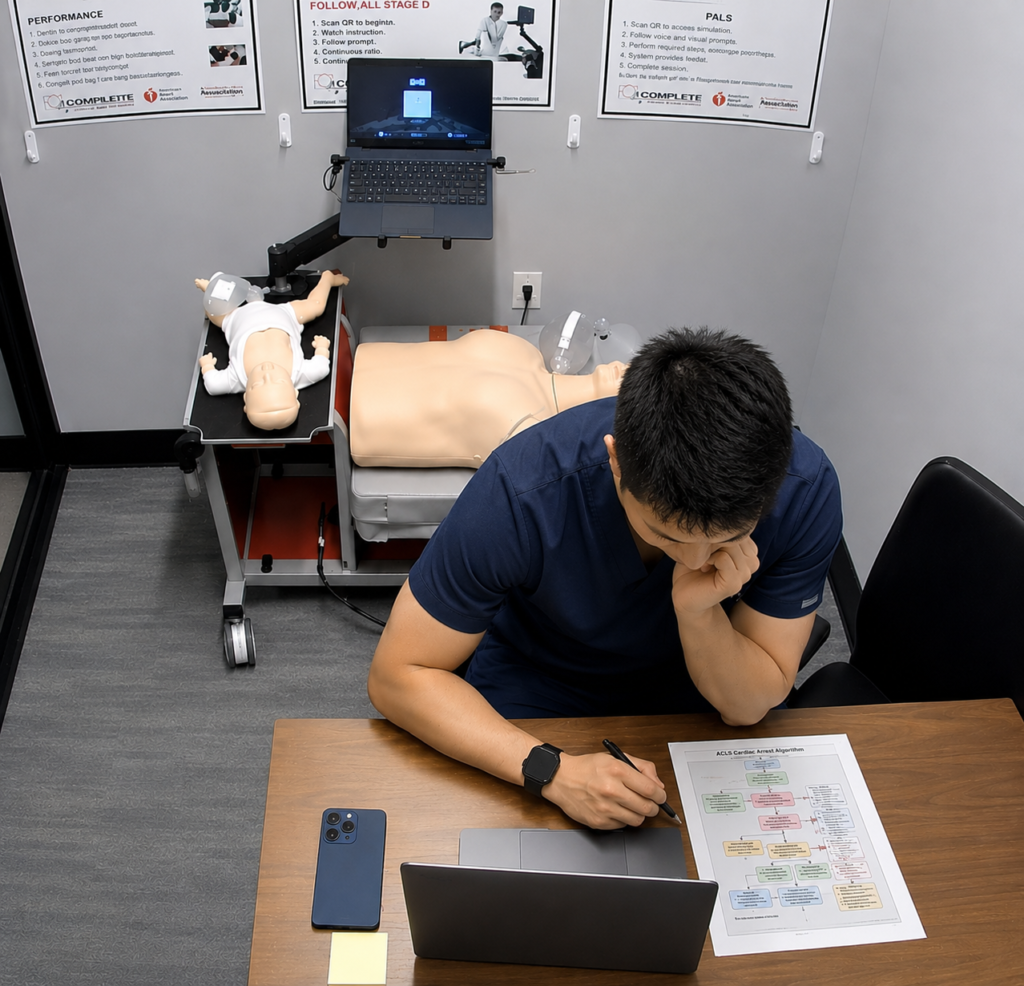
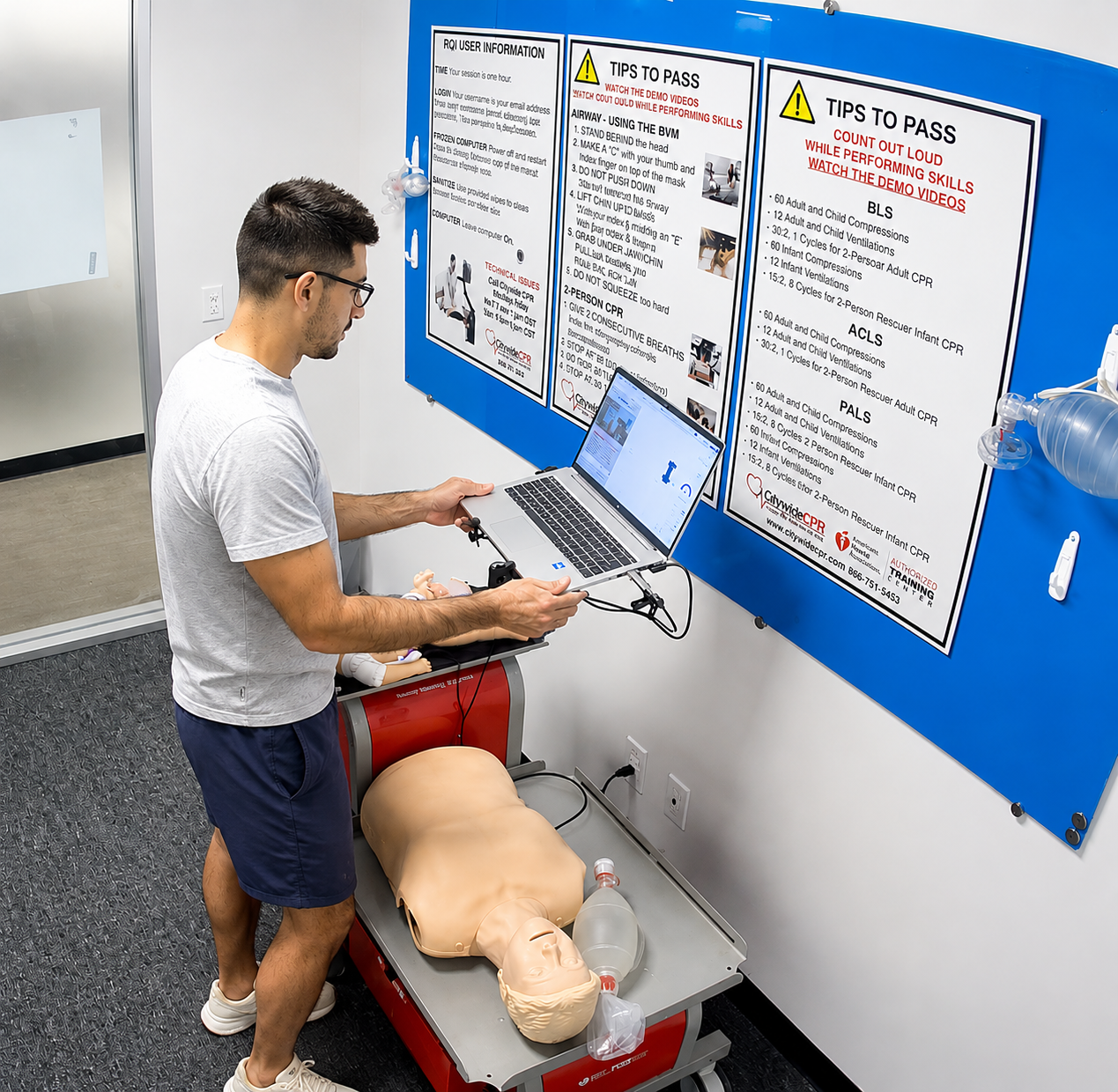
Your ACLS skills session focuses on demonstrating high-quality CPR skills using the American Heart Association CPR Verification Station. During the session, you will perform adult CPR skills, including compressions, ventilations, and two-rescuer CPR as required by the AHA skills curriculum.
The advanced ACLS concepts—including ECG rhythm recognition, medications, algorithms, team dynamics, and patient management—are completed during the required HeartCode ACLS eLearning course before your scheduled skills session.