Preparing for American Heart Association (AHA) ACLS Certification involves much more than memorizing algorithms. Advanced Cardiovascular Life Support requires healthcare professionals to understand how medications fit into evidence-based patient care, while also recognizing cardiac rhythms, communicating effectively with a resuscitation team, and delivering high-quality CPR.
Although the HeartCode ACLS eLearning course introduces commonly used medication concepts, it’s important to remember that medications are only one part of successful emergency cardiovascular care. Understanding when medications may be considered—and how they fit into the broader treatment strategy—helps learners build confidence before beginning their ACLS skills session. This guide is intended to supplement your preparation and does not replace official American Heart Association course materials.
Why Medication Knowledge Matters During ACLS
Medication therapy plays an important role in Advanced Cardiovascular Life Support, but it is never used in isolation. Successful patient outcomes depend on combining medication knowledge with accurate patient assessment, rhythm recognition, high-quality CPR, and effective teamwork.
During the HeartCode ACLS eLearning course, participants are introduced to medication concepts within the context of emergency cardiovascular care. Rather than memorizing drug lists, learners develop an understanding of how medications support evidence-based treatment strategies that follow current American Heart Association recommendations.
Who Should Complete ACLS Certification?
American Heart Association ACLS Certification is designed for healthcare professionals who may manage or participate in the care of adult patients experiencing cardiovascular emergencies.
Healthcare professionals who commonly require ACLS Certification include:
- Registered Nurses (RNs)
- Physicians
- Nurse Practitioners
- Physician Assistants
- Respiratory Therapists
- Paramedics
- Emergency Department staff
- Intensive Care Unit (ICU) staff
- Cardiac care professionals
Many hospitals and healthcare employers require current ACLS Certification for providers working in critical care, emergency medicine, procedural areas, and other acute care environments.
Medication Concepts Covered During HeartCode ACLS
The HeartCode ACLS course introduces medication concepts as part of a broader approach to emergency cardiovascular care.
Participants become familiar with:
- Medication concepts introduced during ACLS
- The purpose of commonly discussed medications
- Patient assessment considerations
- Rhythm recognition concepts
- Evidence-based emergency cardiovascular care
- Team communication during emergencies
- Following current American Heart Association recommendations
Rather than focusing solely on medications, learners develop an understanding of how each element supports coordinated patient management during emergencies.
Preparing for Your ACLS Skills Session
Preparing before your ACLS appointment can improve both confidence and performance.
Before attending your skills session, consider these recommendations:
- Complete the HeartCode ACLS eLearning course.
- Review commonly discussed medication names and their general purpose.
- Refresh rhythm recognition concepts.
- Arrive prepared to demonstrate high-quality CPR skills.
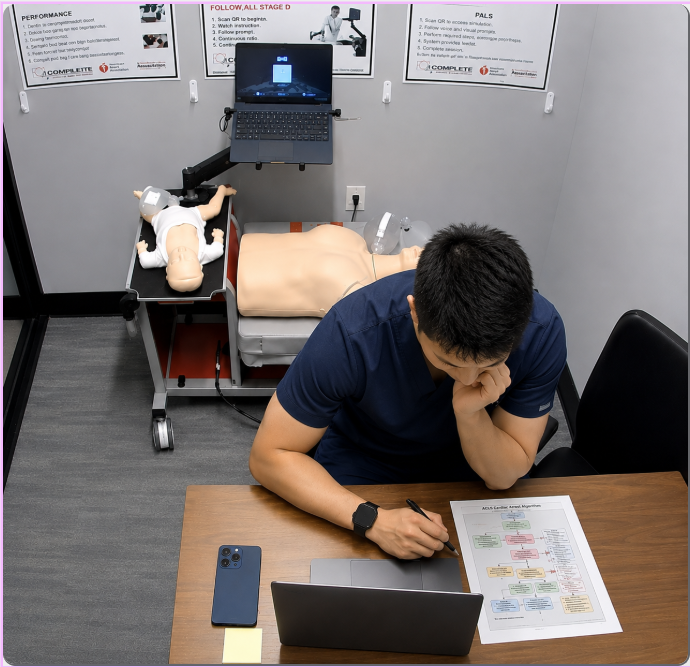
It’s important to remember that the in-person ACLS skills session focuses primarily on demonstrating psychomotor skills and high-quality CPR—not reviewing medication concepts in detail.
Key Takeaways Before ACLS Certification
As you prepare for certification, keep these important points in mind:
- Medication concepts are taught during the HeartCode ACLS eLearning course.
- Medications are one component of evidence-based emergency cardiovascular care.
- Patient assessment, teamwork, and rhythm recognition remain essential.
- The in-person ACLS skills session emphasizes high-quality CPR skills.
Understanding these principles helps learners approach certification with realistic expectations and greater confidence.
Why Healthcare Professionals Choose Citywide CPR
Citywide CPR provides flexible scheduling designed for busy healthcare professionals seeking official American Heart Association ACLS Certification.
Participants benefit from:
- Official American Heart Association ACLS Certification
- Flexible daily appointments
- Self-guided skills sessions
- Convenient nationwide locations
- Same-Day AHA eCards after successful completion
- Simulation-based training that supports evidence-based learning
Whether you’re renewing your certification or completing ACLS for the first time, Citywide CPR helps you prepare for success while accommodating demanding healthcare schedules.
Frequently Asked Questions
Why are medications included in ACLS training?
Medication concepts help healthcare professionals understand how pharmacologic therapy supports evidence-based emergency cardiovascular care alongside CPR, rhythm recognition, and patient assessment.
Does the in-person ACLS skills session focus on medications?
No. The in-person skills session primarily evaluates high-quality CPR and required psychomotor skills rather than reviewing medication concepts.
Who should complete ACLS Certification?
ACLS Certification is commonly required for registered nurses, physicians, respiratory therapists, paramedics, ICU staff, emergency department personnel, and other healthcare professionals caring for critically ill adults.
How long is ACLS Certification valid?
American Heart Association ACLS Certification is typically valid for two years.
Should I complete the online course before my skills session?
Yes. Completing the HeartCode ACLS eLearning course before your appointment ensures you’re prepared for the hands-on skills verification session.
Conclusion
Understanding medication concepts is an important part of preparing for American Heart Association ACLS Certification, but it is only one piece of effective emergency cardiovascular care. High-quality CPR, rhythm recognition, patient assessment, communication, and teamwork all work together to improve patient outcomes during life-threatening emergencies.
By reviewing medication concepts before your HeartCode ACLS course and arriving prepared for your skills session, you’ll build a stronger foundation for certification and clinical practice.
Ready to earn your American Heart Association ACLS Certification?
Citywide CPR offers flexible daily appointments, self-guided ACLS skills sessions, convenient nationwide locations, and Same-Day AHA eCards after successful completion.
Register today and prepare with confidence for your next step in advanced cardiovascular life support. Locate us.