Healthcare workers may need BLS, ACLS, PALS, or a combination of certifications depending on their role, responsibilities, employer, clinical program, facility, and other applicable credentialing requirements. There is no single CPR certification that every healthcare worker universally needs.
For many healthcare professionals and students, American Heart Association BLS is a common foundational credential. Some clinical roles may also require ACLS, while professionals involved in applicable pediatric care may need PALS. Other healthcare professionals may be required to maintain two or all three credentials.
The safest approach is simple:
Confirm the exact certification required for your role before registering.
A nurse working in critical care may have different certification requirements from a medical assistant in an outpatient practice. A pediatric healthcare professional may have different requirements from a dental professional or healthcare student.
Understanding what BLS, ACLS, and PALS cover makes it much easier to identify the appropriate certification pathway.
What Is BLS Certification for Healthcare Workers?
BLS, or Basic Life Support, teaches foundational resuscitation skills used during cardiac arrest, respiratory arrest, and other life-threatening emergencies.
American Heart Association BLS is commonly used by healthcare professionals and healthcare students who need basic cardiovascular life support skills.
BLS training includes concepts and skills such as:
- High-quality CPR for adults, children, and infants
- Recognition of life-threatening emergencies
- AED use
- Effective ventilations
- Relief of foreign-body airway obstruction
- Multiple-rescuer CPR
- Team dynamics during resuscitation
Healthcare professionals who may encounter BLS requirements include nurses, physicians, medical assistants, dental professionals, EMS personnel, respiratory therapists, allied health professionals, and healthcare students.
That does not mean every person in these professions automatically has the same BLS requirement. Employers, schools, facilities, licensing or credentialing bodies, and other applicable organizations determine the credential required for a particular role.
Healthcare professionals preparing for BLS can use Citywide CPR’s BLS Study Guide to review important concepts.
What Is ACLS Certification?
ACLS, or Advanced Cardiovascular Life Support, focuses on advanced assessment and management of adult cardiovascular emergencies.
ACLS builds on foundational resuscitation knowledge and includes concepts relevant to healthcare professionals involved in advanced cardiovascular emergency care.
Topics can include:
- Cardiac arrest management
- Recognition and management of significant arrhythmias
- Advanced airway considerations
- ACLS medications
- Effective resuscitation team dynamics
- Post-cardiac arrest care
- Acute coronary syndromes
- Stroke-related assessment and systems of care
ACLS should not be viewed simply as “more advanced BLS.” The courses serve different purposes and represent separate credentials.
Depending on the healthcare environment, ACLS may be required for professionals working in critical care, emergency care, cardiac care, or other applicable acute-care roles.
The person’s employer, facility, clinical responsibilities, or other applicable requirements determine whether ACLS is necessary.
For additional preparation, review Citywide CPR’s ACLS Study Guide.
What Is PALS Certification?
PALS, or Pediatric Advanced Life Support, focuses on the assessment and management of seriously ill or injured infants and children.
PALS is relevant to healthcare professionals whose roles involve applicable pediatric emergency or advanced pediatric care.
Depending on the person’s responsibilities and organization, PALS may be required in settings involving:
- Pediatric emergency care
- Pediatric critical care
- Other clinical environments where advanced pediatric resuscitation is part of the professional’s responsibilities
PALS is a separate credential from BLS and ACLS.
A healthcare professional should not assume that having ACLS eliminates a PALS requirement—or that having PALS eliminates a separate BLS or ACLS requirement.
Citywide CPR’s PALS Study Guide provides additional review for professionals preparing for PALS.
BLS vs. ACLS vs. PALS: What’s the Difference?
BLS focuses on foundational life support, ACLS focuses on advanced adult cardiovascular emergencies, and PALS focuses on advanced pediatric emergencies.
| Certification | Primary Focus | Who May Commonly Need It |
| BLS | Foundational CPR and basic cardiovascular life support | Healthcare professionals, healthcare students, first responders, and others whose roles require BLS |
| ACLS | Advanced management of adult cardiovascular emergencies | Healthcare professionals involved in applicable emergency, critical, cardiac, or acute care |
| PALS | Advanced assessment and management of pediatric emergencies | Healthcare professionals involved in applicable pediatric emergency or advanced pediatric care |
The table is a general guide—not a universal occupational requirement.
Two people with the same professional title may have different certification requirements because they work in different facilities, departments, or clinical roles.
Do Healthcare Professionals Need More Than One Certification?
Some healthcare professionals maintain BLS plus ACLS, PALS, or both because each credential covers a different scope of resuscitation care.
For example, an organization may require an employee to maintain:
BLS only
or:
BLS + ACLS
or:
BLS + PALS
or:
BLS + ACLS + PALS
Do not assume that an advanced credential automatically replaces another certification.
If your employer or clinical program specifically requires BLS and ACLS, for example, having an ACLS credential should not automatically be treated as a substitute for maintaining BLS.
The appropriate combination is determined by the requirements associated with your role.
What CPR Certification Do Nurses Need?
Nurses may need BLS, ACLS, PALS, or a combination depending on their clinical role, department, patient population, and employer requirements.
Many nursing positions use AHA BLS as a foundational credential, but that does not mean every nurse has identical requirements.
A nurse working in an outpatient environment may have different requirements from a nurse working in an emergency department, intensive care unit, cardiac unit, or pediatric environment.
Some nursing roles may require BLS alone. Others may require BLS and ACLS, BLS and PALS, or multiple credentials.
Check the exact requirements established by the employer or facility rather than choosing a certification based solely on the title “nurse.”
What CPR Certification Do Physicians and Other Providers Need?
Physicians and other healthcare providers may have different BLS, ACLS, and PALS requirements based on their specialty, clinical responsibilities, facility, and credentialing requirements.
A provider involved in advanced cardiovascular emergency management may encounter ACLS requirements, while someone working with pediatric emergencies may also need PALS.
Other providers may need BLS without necessarily needing both advanced certifications.
The correct credential should be determined from the requirements associated with the person’s specific clinical role.
Do Medical Assistants Need BLS Certification?
Many medical assistants may encounter BLS requirements, particularly in direct patient-care environments, but BLS should not be described as a universal requirement for every medical assistant.
Requirements can vary by:
- Employer
- Practice
- Clinical responsibilities
- State or other applicable requirements
- Credentialing expectations
If an employer specifically requests an AHA BLS Provider credential, the employee should select the appropriate BLS pathway rather than assuming a general CPR course will satisfy the requirement.
What CPR Certification Do Dental Healthcare Professionals Need?
Dentists, dental hygienists, dental assistants, and other dental healthcare professionals may have different CPR or BLS requirements depending on their role and applicable professional or workplace requirements.
Some dental professionals may be required to maintain BLS, while others may have additional requirements based on procedures performed, sedation responsibilities, licensing requirements, or facility policies.
Do not assume that every member of a dental team needs the same credential.
The employer, licensing body, facility, or other applicable authority should determine what each role requires.
What Certifications May EMS and Emergency-Care Professionals Need?
EMS and emergency-care professionals may maintain BLS, ACLS, PALS, or combinations of these credentials depending on their scope of practice, role, employer, and applicable credentialing requirements.
Because emergency-care responsibilities can vary significantly, certification requirements should be confirmed for the individual’s specific position.
The fact that someone works in emergency care does not, by itself, establish one universal combination of AHA credentials.
What CPR Certification Do Healthcare Students Need for Clinicals?
Healthcare students should follow the exact certification requirement provided by their school or clinical program.
Many healthcare programs require students to obtain an AHA BLS Provider credential before beginning clinical rotations, but requirements can differ between schools and programs.
Before registering, check:
- The exact certification name
- Whether the program specifically requires American Heart Association training
- When the credential must be valid
- When documentation must be submitted
- Whether additional certifications are required for a particular program
Do not choose a general CPR course simply because the requirement mentions “CPR” if the program specifically requests BLS.
Can Healthcare Workers Complete BLS, ACLS or PALS Online?
Applicable online coursework can be completed online, but online learning alone should not be confused with completing a certification pathway that also requires hands-on skills.
Citywide CPR is an American Heart Association Training Center offering applicable blended-learning pathways.
Depending on the course selected, a participant may complete applicable HeartCode online learning and then complete the required hands-on portion.
The general structure may look like:
Applicable HeartCode online learning → required hands-on skills → successful course completion → applicable AHA eCard
The exact requirements depend on the course pathway selected.
What Is the Difference Between Online + Skills and Skills Only?
Online + Skills is for participants who still need the applicable HeartCode online coursework and required hands-on portion. Skills Only is for eligible participants who have already completed the applicable HeartCode online course and now need the corresponding hands-on skills.
Online + Skills
Choose Online + Skills when you still need:
- The applicable HeartCode online course
- The required hands-on skills portion
Skills Only
Choose Skills Only when you have already completed:
- The applicable HeartCode online coursework
and still need:
- The corresponding required hands-on skills
Having an old, current, or expired Provider eCard is not the same thing as having completed the applicable current HeartCode coursework for a Skills Only appointment.
Participants should choose their registration pathway based on the course components they have actually completed.
Are BLS, ACLS and PALS Hands-On?
Applicable BLS, ACLS, and PALS certification pathways include required hands-on skills.
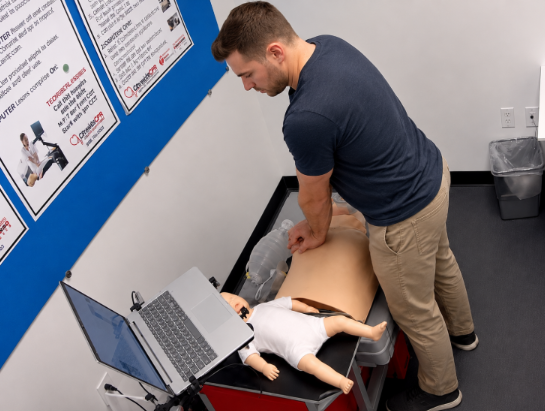
At Citywide CPR, applicable hands-on training can be completed through a Self-Guided Skills Session at a CPR Verification Station™ learning center.
Participants physically perform applicable skills using training equipment while the technology provides instructions and real-time performance feedback.
Self-Guided Learning does not mean online-only training.
The participant still completes hands-on skills. The technology changes how the participant is guided through the applicable skills experience.
For a broader explanation, see Citywide CPR’s Self-Guided CPR Training resource.
See a Citywide CPR Self-Guided Skills Session
See how participants complete hands-on training using Citywide CPR’s Self-Guided Learning format and CPR Verification Station™ technology. Additional course-specific demonstrations are available in the Skills Demonstration Video Library.
How Do Healthcare Workers Renew BLS, ACLS or PALS?
Healthcare professionals should renew the specific credentials required for their role and complete the applicable current course requirements for each certification.
Do not assume that renewing one credential automatically renews another.
If you maintain BLS and ACLS, for example, monitor both credentials and follow any renewal timelines established by your employer or credentialing organization.
For an applicable Citywide CPR pathway:
- Choose Online + Skills if you still need the corresponding HeartCode coursework and hands-on skills.
- Choose Skills Only if you have already completed the applicable HeartCode course and qualify for the corresponding hands-on portion.
- Successfully complete all required components for the certification pathway.
The applicable AHA eCard is issued after successful completion according to the course pathway and current processing procedures.
Need BLS, ACLS or PALS Certification for Your Healthcare Staff?
Healthcare organizations often need to coordinate different certification combinations and renewal dates across their workforce rather than assigning the same credential to every employee.
A hospital, medical practice, dental organization, EMS agency, clinic, or other healthcare employer may have:
- Employees who require BLS
- Employees who require BLS + ACLS
- Employees who require BLS + PALS
- Employees who require BLS + ACLS + PALS
- Staff with different renewal dates
- Roles with other organization-specific requirements
Practice managers, healthcare administrators, clinical educators, credentialing teams, and others coordinating training can organize certification according to the requirements established for each role.
Employees Can Leave Campus
Employees can complete applicable online learning and schedule their Self-Guided Skills Session at a Citywide CPR CPR Verification Station™ learning center.
This approach can work well when employees can leave the workplace and individual or smaller-group scheduling makes it easier to coordinate different certification and expiration dates.
Keep Employees Onsite
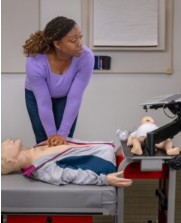
Healthcare organizations that need employees to remain onsite can ask Citywide CPR about portable CPR skills verification delivered to their facility with RQI-P GO where applicable.
Portable onsite skills verification can help organizations coordinate required hands-on training while reducing the need for employees to travel away from the facility.
How Do I Find the Right CPR Certification Near Me?
First determine which credential you need, then look for a training provider offering that specific certification and its required course components.
Before registering, confirm:
- Which certification is required? BLS, ACLS, PALS, or a combination?
- Is a specific training organization required? For example, does your employer or school specify American Heart Association?
- Which course components do you still need? Online + Skills or Skills Only?
- Where will you complete required hands-on skills?
- What documentation must you submit after completion?
Citywide CPR offers applicable Self-Guided Skills Sessions through CPR Verification Station™ learning centers at locations nationwide.
You can also use CPR Finder to search for CPR certification options.
Frequently Asked Questions
What CPR certification do healthcare workers need?
Healthcare workers may need BLS, ACLS, PALS, or a combination depending on their role, responsibilities, employer, facility, clinical program, and applicable credentialing requirements. There is no single certification combination required for every healthcare worker.
Is BLS the standard CPR certification for healthcare professionals?
BLS is commonly required in healthcare environments because it covers foundational basic life support skills. However, the organization requesting certification determines whether BLS—or another credential—is required for a particular healthcare role.
What is the difference between BLS, ACLS and PALS?
BLS focuses on foundational CPR and basic life support. ACLS focuses on advanced adult cardiovascular emergencies. PALS focuses on advanced pediatric emergencies. They are separate credentials designed for different scopes of resuscitation care.
Do nurses need BLS and ACLS?
Some nurses may need both, while others may require BLS alone or a different combination. Requirements depend on the nurse’s department, responsibilities, employer, patient population, and other applicable requirements.
Do healthcare students need BLS for clinicals?
Many healthcare programs require AHA BLS before clinical rotations, but the student’s school or clinical program determines the exact credential required.
Do medical assistants need BLS?
Many medical assistants may encounter BLS requirements, particularly in patient-care roles, but requirements vary by employer, practice, responsibilities, and other applicable standards.
Do dental professionals need BLS?
Some dentists, hygienists, dental assistants, and other dental professionals may need BLS or another CPR credential. Requirements can vary according to role, employer, licensing requirements, procedures performed, and facility policies.
Does ACLS replace BLS?
Do not assume that it does. If an employer or program requires separate BLS and ACLS credentials, the healthcare professional should maintain both according to those requirements.
Does PALS replace BLS or ACLS?
No automatic substitution should be assumed. PALS is a separate pediatric advanced life support credential. Follow the specific certification requirements established for your role.
Can healthcare workers complete BLS, ACLS or PALS entirely online?
Applicable HeartCode coursework can be completed online, but online coursework alone does not complete a pathway that also requires hands-on skills.
What is a Self-Guided Skills Session?
A Self-Guided Skills Session is a hands-on training experience in which the participant physically performs applicable skills while CPR Verification Station™ technology provides instructions and real-time performance feedback.
What is the difference between Online + Skills and Skills Only?
Online + Skills is for participants who still need the applicable HeartCode online coursework and hands-on portion. Skills Only is for eligible participants who already completed the applicable HeartCode online coursework and need the corresponding hands-on skills.
When is an AHA eCard issued?
The applicable AHA eCard is issued after successful completion of the required course components according to the selected course pathway and current processing procedures.
How can an employer coordinate BLS, ACLS and PALS for multiple employees?
Healthcare organizations can identify the required credential for each employee and coordinate training according to certification type and renewal date. Citywide CPR offers healthcare staff options using nearby CPR Verification Station™ learning centers and, where applicable, portable onsite skills verification.
Find the CPR Certification That Matches Your Healthcare Role
The right certification begins with the requirement—not the job title alone.
A healthcare professional may need BLS, ACLS, PALS, or a combination, depending on clinical responsibilities and the requirements established by an employer, school, facility, credentialing organization, or other applicable authority.
Citywide CPR is an American Heart Association Training Center offering applicable BLS, ACLS, and PALS certification and renewal pathways with required hands-on training.
Healthcare professionals preparing for certification can review the BLS Study Guide, ACLS Study Guide, or PALS Study Guide.
For healthcare organizations coordinating certification across multiple employees, learn about CPR Training for Healthcare Staff – BLS, ACLS & PALS.