Healthcare organizations do not always have an easy way to get multiple employees through certification at the same time. Staff may work different shifts, care for patients throughout the day, or be spread across departments and facilities.
So how does onsite BLS, ACLS or PALS training work? Citywide CPR can bring portable skills verification directly to an eligible healthcare organization’s facility using RQI-P GO, allowing applicable employees to complete required hands-on skills at their workplace instead of having everyone travel to an offsite training location. Citywide CPR also offers individual Self-Guided Skills Sessions at CPR Verification Station™ learning centers when that approach better fits an organization’s needs.
The exact training arrangement depends on the organization’s certifications, employee schedules, location and other logistical needs.
How Does Onsite BLS, ACLS & PALS Training Work?
The process begins by determining what certifications the organization’s employees actually need and how the training should fit into the work schedule.
For applicable AHA programs, the process can involve:
- Identify the certifications needed. An organization may have employees who need BLS, while others may require ACLS or PALS based on their roles and organizational requirements.
- Determine the appropriate course format. Applicable online learning may be completed before the hands-on portion when using a blended-learning pathway.
- Coordinate the onsite session. Citywide CPR works with the organization to determine an appropriate onsite training arrangement.
- Bring portable skills verification to the facility. For applicable programs, Citywide CPR can use the RQI-P GO portable solution at the organization’s workplace.
- Employees practice and perform their required skills. The hands-on component is completed using the appropriate training equipment and skills-verification process.
- Complete the applicable course requirements. Employees must successfully complete the requirements for the certification they are taking.
- Receive the official AHA eCard. The official AHA eCard is processed the same day after successful completion of course requirements and the skills session.
This approach separates the online learning component from the hands-on skills component when the applicable AHA course uses blended learning. The portable onsite solution is focused on bringing the hands-on skills-verification portion closer to the employees rather than requiring everyone to travel to a Citywide CPR location.
Citywide CPR is an American Heart Association Training Center offering BLS, ACLS and PALS certification and renewal options through flexible training models.
What Equipment Is Used for Onsite CPR Skills Verification?
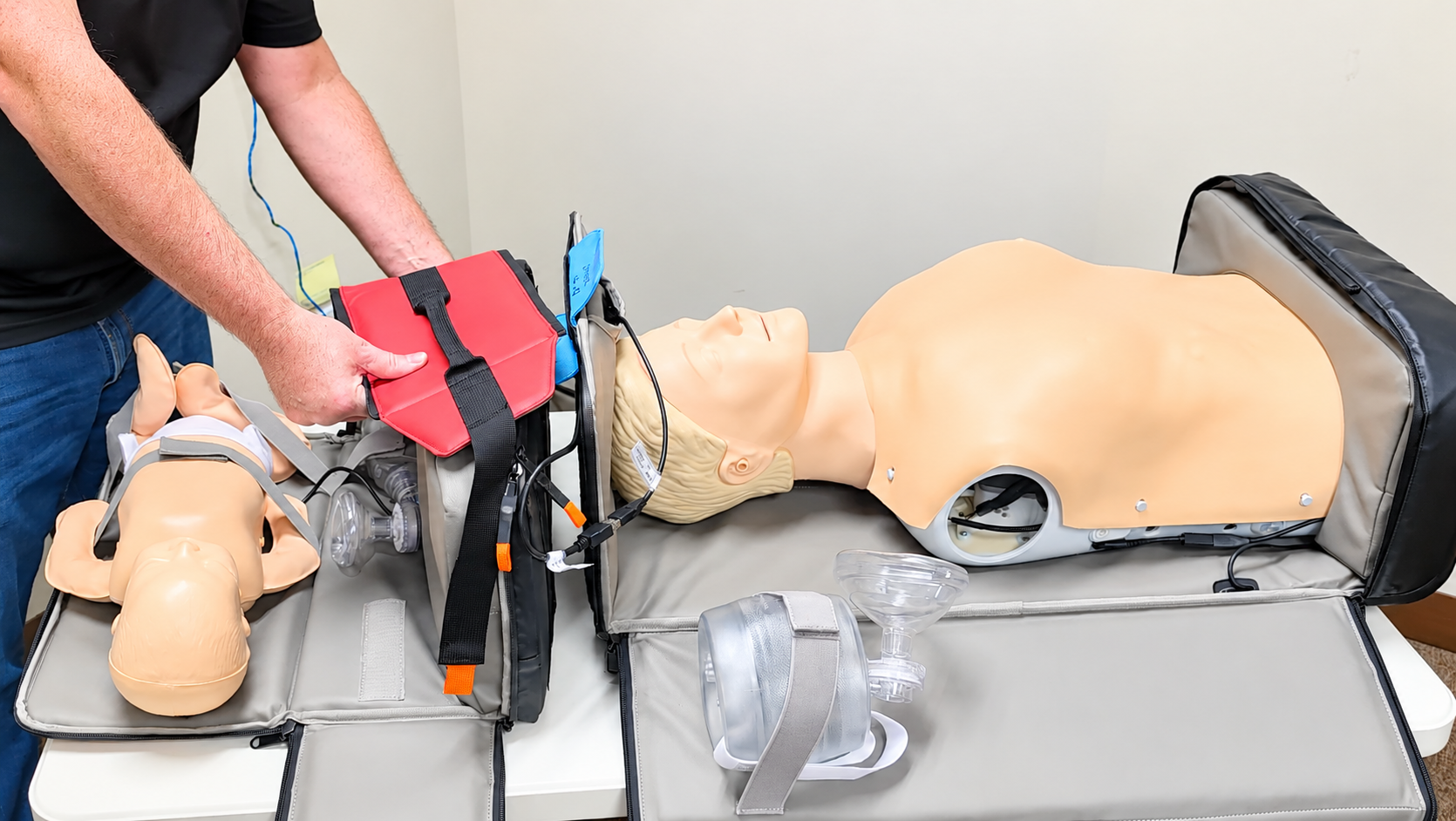
For applicable onsite programs, Citywide CPR can use RQI-P GO, a portable skills-verification solution designed to bring CPR skills training and verification equipment directly to an organization’s facility.
The benefit for an employer is practical: instead of arranging for employees to travel individually to a Citywide CPR location, the appropriate portable equipment can be brought to the workplace for an onsite skills experience.
The RQI-P GO setup is part of Citywide CPR’s broader healthcare staff training program, which offers organizations the choice of having employees complete Self-Guided Skills Sessions at CPR Verification Station™ learning centers or exploring portable skills verification at their own facility.
The equipment provides real-time feedback during applicable CPR skills performance. This gives participants information about their performance while completing the hands-on experience.
Citywide CPR’s Skills Demonstration Library also provides first-party BLS, ACLS and PALS skills demonstrations that employees can use to become familiar with applicable skills before their appointment or training session.
Which Certifications Can Healthcare Staff Complete?
The appropriate certification depends on the employee’s role and the requirements established by the organization, employer or other applicable credentialing body.
AHA BLS
BLS is commonly used for healthcare-provider CPR training. Organizations may coordinate BLS certification or renewal for nurses, clinical staff, medical practices and other healthcare employees whose roles require an appropriate BLS credential.
Applicable BLS training can use online learning followed by the required hands-on skills component.
AHA ACLS
ACLS is another healthcare certification that organizations may need to coordinate for applicable employees.
Not every healthcare employee needs ACLS. The appropriate certification depends on the employee’s role and the requirements established by their employer or organization.
AHA PALS
PALS may be appropriate for healthcare professionals whose roles involve pediatric or other responsibilities covered by the applicable AHA PALS course.
Again, organizations should determine which employees actually need PALS rather than assuming that every healthcare employee requires the same certification.
Who Is Onsite Training Useful For?
Portable onsite skills verification can be useful when an organization has several employees who need certification or renewal but cannot easily send everyone to an offsite location.
Potential organizations include:
- Hospitals and healthcare systems
- Medical practices
- Dental organizations
- Clinics
- Nursing departments
- EMS organizations
- Physician groups
- Other healthcare employers
The important consideration is not simply the number of employees. Organizations should also consider where employees work, what certifications they need and whether their schedules allow them to attend training together.
For example, a medical practice might have nurses working different shifts, while a healthcare organization could have employees distributed across several departments. An onsite option may help reduce the travel associated with coordinating the hands-on portion of training.
Citywide CPR’s healthcare staff program is specifically designed around this flexibility, with both location-based and portable training approaches available depending on organizational needs.
Onsite Training vs. Sending Employees to a CPR Verification Station
Citywide CPR gives healthcare organizations two flexible approaches to consider.
Option 1 — Employees Attend a Citywide CPR Verification Station
Employees can complete the applicable online learning and individually schedule a Self-Guided Skills Session at a nearby CPR Verification Station™ learning center.
This can work well when employees have different schedules or when the organization does not need everyone to complete the hands-on portion together.
Citywide CPR has locations across multiple states with flexible BLS, ACLS and PALS certification and renewal options.
Option 2 — Bring Portable Skills Verification to the Facility
For organizations that want employees to complete the applicable hands-on experience at their own workplace, Citywide CPR can discuss portable skills verification using RQI-P GO.
This can be useful when employee travel is difficult or when keeping the training closer to the workplace makes scheduling easier.
The two approaches do not have to be treated as competing systems. An organization should consider its employee count, locations, schedules and certification needs before determining which arrangement makes the most sense.
Can Employees Complete BLS, ACLS and PALS Without Leaving the Workplace?
For applicable onsite programs, employees can complete the required hands-on skills verification at their organization’s facility using Citywide CPR’s portable RQI-P GO solution.
That does not necessarily mean every part of every certification course happens onsite. When an applicable AHA course includes online learning, employees may need to complete that cognitive component separately before the hands-on skills portion.
The key advantage of portable skills verification is that the organization can bring the applicable hands-on component closer to the employees rather than automatically sending everyone to an offsite location.
Organizations should discuss their specific courses, employee count and scheduling needs with Citywide CPR to determine what training arrangement is appropriate.
How Can Portable Training Reduce Disruption to Healthcare Operations?
Healthcare organizations have to balance training with patient care, staffing and shift coverage.
Portable skills verification can help reduce some of the logistical challenges associated with sending employees away from the workplace. Depending on the organization’s setup, employees may be able to complete the applicable skills portion at their facility instead of traveling to another location.
Other scheduling strategies can help as well. For example, an organization might combine online learning with scheduled hands-on sessions or stagger employees across different training times rather than removing an entire department from its normal schedule.
The goal is not to promise zero disruption. Rather, it is to give organizations more ways to coordinate certification around the realities of their workday.
What If Some Employees Need BLS and Others Need ACLS or PALS?
A healthcare organization does not necessarily need to give every employee the same certification.
A nursing team might have employees who need BLS, while certain other roles may have separate ACLS or PALS requirements. The organization should first identify what each employee actually needs based on its own policies and credentialing requirements.
Once those needs are identified, Citywide CPR can help the organization explore an appropriate training approach.
This is one reason it can be useful to plan staff certification as an organizational project rather than simply booking the same course for everyone.
What Information Should an Organization Have Ready?
If you are responsible for coordinating healthcare staff training, having a few basic details ready can make the planning process easier.
Consider:
- Approximately how many employees need training
- Which certifications are needed: BLS, ACLS, PALS or another applicable course
- Whether employees are completing initial certification or renewal
- Where the employees are located
- Whether they work the same or different shifts
- Whether training needs to happen at the workplace
- Whether employees can complete applicable online coursework independently
- When certifications need to be completed or renewed
These details help Citywide CPR understand the organization’s logistical needs and determine which training approach may be appropriate.
How Do We Arrange Onsite BLS, ACLS or PALS Training for Our Staff?
The simplest next step is to provide Citywide CPR with information about your organization and the employees who need training.
Citywide CPR’s healthcare staff training program offers organizations flexible options that can include Self-Guided Skills Sessions at CPR Verification Station™ learning centers or portable skills verification at the organization’s facility.
When contacting Citywide CPR, be prepared to explain your approximate employee count, certifications needed, locations and preferred scheduling approach.
Frequently Asked Questions About Onsite BLS, ACLS & PALS Training
What is onsite BLS training for healthcare staff?
Onsite BLS training allows an organization to coordinate applicable BLS training at its own facility rather than requiring every employee to travel to an outside training location. For applicable programs, Citywide CPR can bring portable skills verification to the organization using RQI-P GO.
Can Citywide CPR bring BLS, ACLS or PALS skills verification to our facility?
For applicable programs, Citywide CPR can provide portable skills verification using RQI-P GO. The appropriate arrangement depends on the course, organization and training requirements.
Does onsite training mean employees do not have to complete the online course?
No. When the applicable AHA course uses a blended-learning format, the required online learning and hands-on skills component are separate parts of the training process. Portable onsite skills verification addresses the hands-on portion; it does not automatically replace required online coursework.
Do all healthcare employees need BLS, ACLS or PALS?
No single certification applies to every healthcare employee. Requirements can vary by role, employer and organization. Healthcare organizations should determine which certifications apply to each employee before arranging training.
Can employees train individually at a Citywide CPR location instead?
Yes. Citywide CPR also offers Self-Guided Skills Sessions at CPR Verification Station™ learning centers. This can be useful when employees have different schedules or when sending everyone to an onsite session is not necessary.
How does RQI-P GO help healthcare organizations?
RQI-P GO provides a portable way to bring applicable CPR skills training and verification equipment to an organization’s facility. This can help reduce employee travel and give organizations another way to coordinate hands-on skills around their operational schedules.
How do we request onsite training for our healthcare organization?
Start with the number of employees, certifications needed, workplace location and scheduling considerations. Citywide CPR can then discuss the available staff-training approach for the organization’s needs.