Emergency room nurses may care for patients across a wide range of ages and medical conditions, including infants and children experiencing serious illness or injury. When pediatric emergencies are part of a nurse’s responsibilities, an employer or clinical department may require American Heart Association Pediatric Advanced Life Support (PALS) certification.
PALS is not automatically required for every emergency room nurse. The appropriate credential depends on the nurse’s responsibilities, department, employer, facility requirements, and other applicable professional requirements. If you have been told that you need PALS certification or renewal, Citywide CPR provides applicable AHA PALS training through Online + Skills and Skills Only pathways at participating locations.
Do Emergency Room Nurses Need PALS Certification?
Some emergency department nurses need PALS because their roles involve caring for critically ill or injured pediatric patients. Others may only need BLS, ACLS, or another credential based on their specific responsibilities.
The best way to determine whether you need PALS is to check the requirements provided by your hospital, emergency department, employer, school, or credentialing organization. Do not assume that every ER nurse needs PALS simply because they work in an emergency department.
For nurses who do need it, PALS addresses pediatric emergency care in greater depth than a general CPR course. Citywide CPR offers PALS certification and renewal through applicable American Heart Association pathways.
Why Is PALS Important for Emergency Department Nurses?
Pediatric emergencies can require rapid assessment and coordinated intervention. PALS training focuses on recognizing and responding to serious conditions involving infants and children, helping eligible healthcare professionals develop the knowledge and skills needed for pediatric emergency situations.
For an emergency room nurse, PALS may complement other certifications required for the role. BLS provides foundational resuscitation skills, while ACLS focuses on advanced adult cardiovascular life support and PALS focuses specifically on pediatric advanced life support.
PALS is therefore not simply another version of CPR. It addresses pediatric assessment and emergency response at an advanced healthcare-provider level.
What Does AHA PALS Training Cover?
AHA PALS training addresses pediatric emergencies and the clinical decisions involved in responding to critically ill or injured infants and children. The specific course content follows the applicable American Heart Association PALS curriculum.
For ER nurses, the training can be particularly relevant to situations involving pediatric respiratory problems, cardiac arrest, shock, and other emergencies requiring coordinated assessment and treatment.
Recognizing Pediatric Respiratory Emergencies
Respiratory problems can become serious quickly in infants and children. PALS training addresses pediatric assessment and emergency-response concepts that help healthcare professionals recognize respiratory emergencies and respond appropriately.
For nurses working in emergency care, this knowledge can be particularly important when a child’s condition changes rapidly and the clinical team needs to coordinate its response.
Pediatric Cardiac Arrest and Resuscitation
PALS also addresses pediatric cardiac arrest and resuscitation. The training builds on foundational resuscitation knowledge while focusing on the differences involved in caring for pediatric patients.
This is one reason PALS should not be confused with general pediatric CPR or Heartsaver CPR AED training. PALS is an advanced healthcare-provider course intended for professionals whose responsibilities include pediatric emergency care.
Pediatric Assessment and Emergency Response
PALS includes pediatric assessment and emergency-response concepts that help healthcare professionals approach seriously ill or injured children systematically.
For ER nurses, these skills can complement the broader clinical responsibilities they already have while providing a structured approach to pediatric emergencies.
What Is the Difference Between BLS, ACLS, and PALS for ER Nurses?
BLS, ACLS, and PALS serve different purposes, and an emergency nurse may need more than one depending on the requirements of the position.
BLS focuses on foundational life-support skills such as high-quality CPR and AED use and is commonly required for healthcare professionals. ACLS focuses on advanced cardiovascular life support for adults and may be required for nurses working in emergency, critical-care, cardiovascular, or other applicable settings.
PALS focuses on advanced life support for pediatric patients. An ER nurse who cares for both adults and children may therefore have employer requirements involving BLS plus ACLS and/or PALS.
One certification does not automatically replace another. Confirm the specific credentials your employer or clinical program requires before registering.
Can Emergency Room Nurses Complete PALS Certification Online?
The knowledge-based portion of an applicable AHA HeartCode PALS pathway can be completed online, but the blended-learning pathway is not an online-only certification.
Citywide CPR’s PALS Online + Skills pathway combines the applicable HeartCode PALS online course with a required in-person hands-on skills session. Participants complete the online coursework before attending the physical skills appointment.
If you are looking for PALS certification online, it is important to distinguish online coursework from the complete certification pathway. Completing the online portion alone does not replace the required hands-on component.
Complete the AHA HeartCode PALS Online Course
With PALS Online + Skills, participants begin by completing the applicable AHA HeartCode PALS online coursework. The online portion provides the knowledge-based component before the hands-on appointment.
Completing the coursework independently can be useful for ER nurses working rotating shifts or balancing clinical responsibilities. Once the applicable online requirements are complete, the participant proceeds to the scheduled skills session.
If you have already completed the appropriate HeartCode PALS course, you may instead be eligible for PALS Skills Only. You should be prepared to provide or upload your applicable HeartCode completion certificate as required during registration.
Complete Your In-Person PALS Skills Session
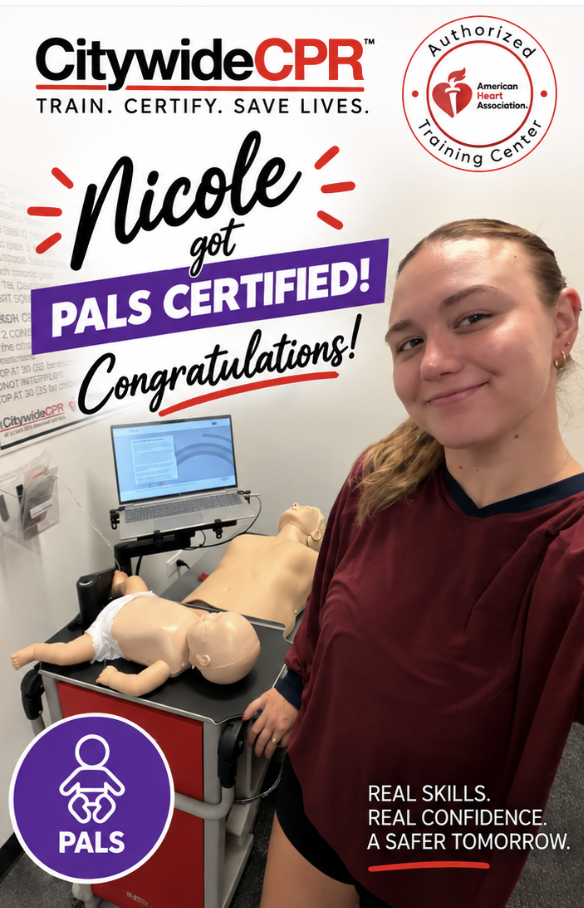
The hands-on portion takes place at a participating Citywide CPR CPR Verification Station. During the Self-Guided Skills Session, participants practice and perform the required skills using applicable training equipment and Voice-Assisted Manikin technology.
The system provides guidance and real-time feedback during the skills experience. Self-Guided does not mean that the hands-on portion is completed virtually or eliminated. Participants physically attend the training location and complete the required skills experience.
Citywide CPR does not offer virtual PALS skills sessions. The applicable hands-on component must be completed in person.
How Does Citywide CPR’s Self-Guided PALS Training Work?
Citywide CPR’s Self-Guided model separates the knowledge-based online learning from the hands-on skills experience. After completing the applicable HeartCode PALS coursework, participants attend a scheduled appointment at a participating CPR Verification Station.
The Voice-Assisted Manikin guides participants through the applicable hands-on experience and provides real-time feedback. Participants practice and perform the required skills while following the system’s guidance.
The Self-Guided format is different from a traditional instructor-led classroom course. The technology guides the skills experience, while Citywide CPR support is available when assistance with the session or equipment is needed.
You can learn more about the process through Citywide CPR’s Self-Guided CPR Training information.
How Long Does PALS Certification Take?
The total time required for PALS certification depends on the pathway you select and how much of the course you have already completed.
For Online + Skills, the complete process includes the AHA HeartCode PALS online coursework as well as the required in-person skills session. The Self-Guided skills portion typically takes approximately 15–30 minutes, but that is not the total time required to complete PALS certification.
For Skills Only, the participant has already completed the applicable online course, so the remaining appointment focuses on the required hands-on component.
Citywide CPR’s PALS course information explains that the hands-on skills portion is generally completed in about 30 minutes, while the overall pathway includes the separate online learning component when applicable.
How Often Do ER Nurses Need PALS Renewal?
AHA PALS Provider eCards are generally valid for two years. However, your employer, hospital, department, school, or credentialing organization may have its own requirements for maintaining the credential.
Check the expiration date on your current PALS eCard and allow enough time to complete the appropriate renewal pathway before your credential is needed.
If you are renewing PALS, do not assume that every returning participant has exactly the same requirements. Your current certification status and the requirements of the organization requesting the credential can affect which course pathway is appropriate.
Citywide CPR offers applicable PALS certification and renewal options through participating locations. The PALS certification and renewal page provides information about the available pathways.
Why Choose Citywide CPR for AHA PALS Certification?
Citywide CPR is an American Heart Association Training Center offering PALS certification and renewal through participating locations. Eligible healthcare professionals can choose an applicable Online + Skills pathway or Skills Only when they have already completed the required HeartCode PALS online course.
The Self-Guided approach allows ER nurses and other healthcare professionals to complete the applicable online coursework before attending a focused, in-person skills appointment. The CPR Verification Station uses Voice-Assisted Manikin technology and real-time feedback to guide the hands-on skills experience.
Citywide CPR has participating locations nationwide, although PALS availability can vary by location. Use the Citywide CPR location finder to identify a location offering the PALS pathway you need.
After successful completion of the applicable course requirements and hands-on skills session, the official American Heart Association eCard is processed the same day.
Find PALS Certification and Renewal Near You
If you are an emergency room nurse, pediatric emergency nurse, or other healthcare professional who needs PALS certification, begin by confirming the exact requirement from your employer or clinical program.
If you need both the HeartCode PALS online course and the hands-on component, review the PALS certification option and select the applicable Online + Skills pathway. If you have already completed the appropriate HeartCode PALS online course, review PALS Skills Only to determine whether that option fits your situation.
When you are ready to find a participating skills location, use the Citywide CPR locations page to review available PALS training options.
The official American Heart Association eCard is processed the same day after successful completion of course requirements and the skills session.
Whether you are preparing for initial PALS certification or renewing an existing credential, selecting the correct pathway before registering can help you complete the training required for your emergency nursing role.