If you’re preparing for an American Heart Association (AHA) Advanced Cardiovascular Life Support (ACLS) course, you may be wondering exactly what you’ll learn. ACLS training builds upon Basic Life Support (BLS) and teaches healthcare professionals how to recognize, manage, and treat life-threatening cardiovascular emergencies using evidence-based AHA guidelines.
Whether you’re a nurse, physician, paramedic, respiratory therapist, or healthcare student, understanding the topics covered in ACLS can help you feel confident before beginning your certification.
Cardiac Arrest Recognition and Management
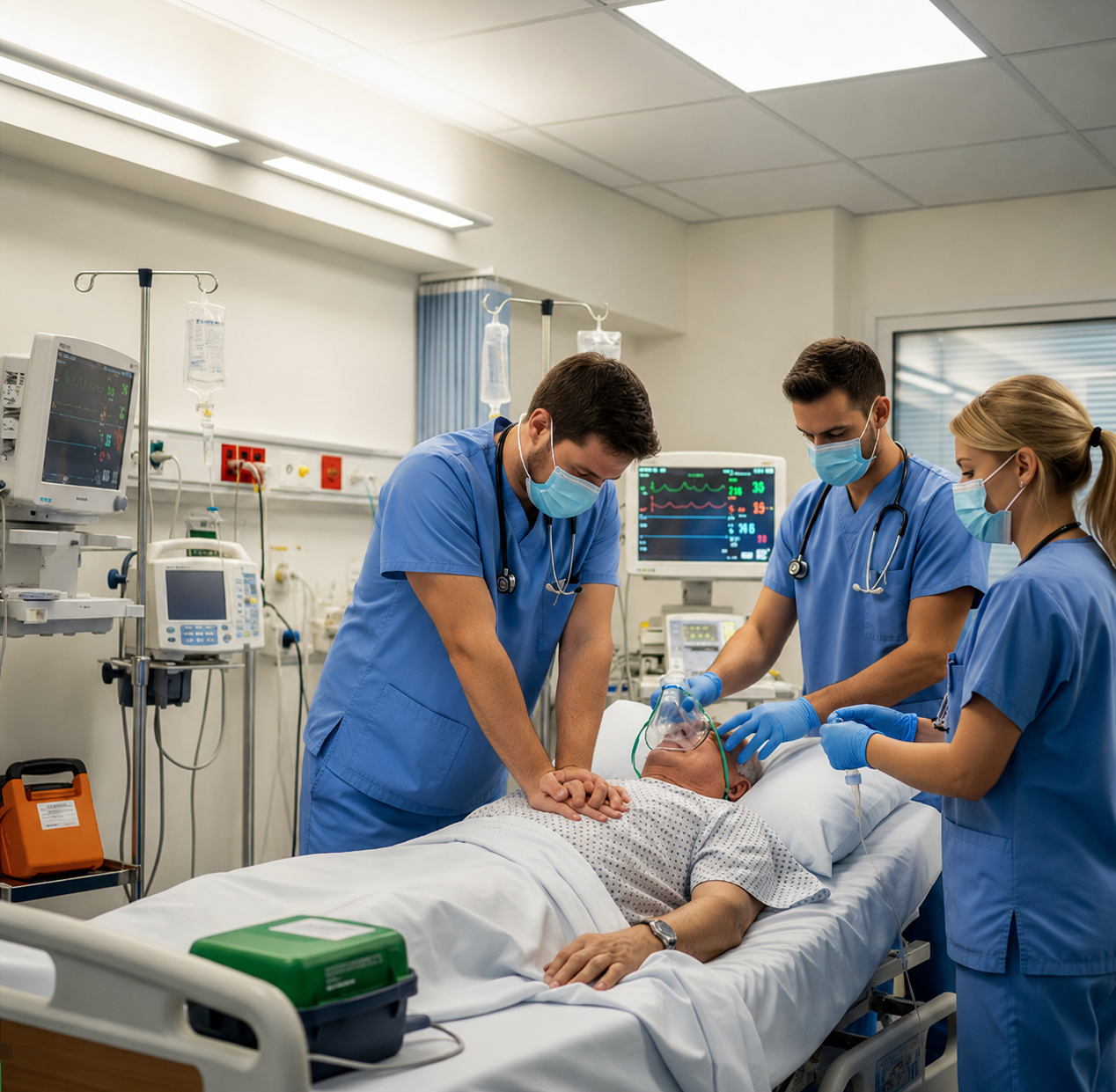
One of the primary focuses of ACLS is recognizing cardiac arrest and initiating immediate treatment. Students learn how to identify pulseless rhythms, begin high-quality CPR, perform rapid defibrillation when appropriate, and coordinate resuscitation efforts with a healthcare team.
Early recognition and intervention are critical for improving survival rates and patient outcomes.
ECG Interpretation and Heart Rhythm Recognition
ACLS teaches providers how to recognize common cardiac rhythms that require immediate intervention.
Students learn to identify rhythms such as:
- Ventricular Fibrillation (VF)
- Ventricular Tachycardia (VT)
- Pulseless Electrical Activity (PEA)
- Asystole
- Symptomatic Bradycardia
- Tachycardia
Understanding these rhythms allows healthcare professionals to make timely treatment decisions during emergencies.
Advanced Airway Management and Ventilation
Maintaining a patient’s airway is another essential component of ACLS training.
Students review:
- Bag-mask ventilation
- Oxygen administration
- Advanced airway placement concepts
- Proper ventilation techniques
- Airway confirmation and monitoring
Proper airway management helps ensure adequate oxygen delivery during cardiac emergencies.
ACLS Medications
Healthcare providers also become familiar with the emergency medications commonly used during resuscitation.
Topics include:
- Epinephrine
- Amiodarone
- Adenosine
- Atropine
- Dopamine
- Other medications included in current AHA treatment algorithms
Students learn when medications are indicated and how they fit into the overall management of cardiovascular emergencies.
Stroke and Acute Coronary Syndrome
Not every ACLS emergency involves cardiac arrest.
The course also covers the early recognition and treatment priorities for:
- Acute Stroke
- ST-Elevation Myocardial Infarction (STEMI)
- Acute Coronary Syndrome (ACS)
Early identification allows healthcare teams to activate the appropriate treatment pathways as quickly as possible.
Post-Cardiac Arrest Care
Successful resuscitation is only the beginning.
ACLS also teaches healthcare professionals how to stabilize patients after Return of Spontaneous Circulation (ROSC), including monitoring, blood pressure management, oxygenation, and ongoing neurological assessment.
These interventions improve long-term patient outcomes following cardiac arrest.
Team Dynamics and Communication
Modern resuscitation depends on effective teamwork.
Throughout ACLS, students learn how to communicate clearly, assign roles, provide constructive feedback, and work efficiently during high-stress emergencies.
Strong team dynamics help improve patient safety and overall resuscitation performance.
Skills Testing and Certification
After completing the required online coursework, students demonstrate their hands-on skills during an American Heart Association ACLS skills session.
At Citywide CPR, skills sessions are available daily at locations throughout the United States. Most appointments take approximately 30 minutes to complete, and students who complete their skills session before 5:00 PM CST receive their official AHA eCard the same day.
Why Healthcare Professionals Choose Citywide CPR
Healthcare professionals choose Citywide CPR because we offer flexible scheduling, convenient nationwide locations, and official American Heart Association certification.
Whether you’re completing ACLS for a new job, hospital credentialing, nursing school, or license renewal, our streamlined skills sessions make certification simple and convenient.
Frequently Asked Questions
Do I need BLS before taking ACLS?
Yes. ACLS builds upon the principles taught in Basic Life Support (BLS). Students should already understand high-quality CPR before beginning ACLS training.
How long is ACLS certification valid?
American Heart Association ACLS certification is valid for two years.
Does ACLS include a skills session?
Yes. After completing the online HeartCode ACLS course, students complete a hands-on skills session to demonstrate competency using AHA-approved equipment.
When will I receive my AHA eCard?
Students who complete their skills session before 5:00 PM CST typically receive their official American Heart Association eCard the same day.
Ready to Complete Your ACLS Certification?
Citywide CPR offers official American Heart Association ACLS skills sessions with flexible daily appointments across the country. Whether you’re certifying for the first time or renewing your credentials, our streamlined process makes earning your certification fast and convenient.
Find a Citywide CPR location near you and schedule your ACLS skills session today.