Workplace emergencies can happen in offices, schools, healthcare facilities, manufacturing environments, childcare settings, hospitality businesses, and other organizations. When employees know how to recognize an emergency and respond with CPR, an AED, or First Aid, they can be better prepared to act while professional emergency services are being contacted.
Citywide CPR provides American Heart Association training options for workplaces and organizations, including Heartsaver CPR AED, Heartsaver First Aid CPR AED, healthcare-focused BLS, and onsite group training. The right course depends on your employees’ responsibilities, your organization’s needs, and any applicable employer, industry, or regulatory requirements.
Why CPR, AED and First Aid Training Matters in the Workplace
Workplace CPR and First Aid training gives employees practical preparation for emergencies that may occur before professional medical help arrives. Depending on the course, participants can learn how to recognize cardiac arrest, perform CPR, use an AED, respond to common injuries and illnesses, and provide appropriate First Aid.
For employers, training can also be part of a broader workplace emergency-preparedness program. The specific training your organization needs should be determined by your industry, employee responsibilities, workplace policies, and applicable requirements rather than assuming every employee needs the same certification.
Citywide CPR offers CPR, AED and First Aid training for workplace staff for organizations looking to coordinate appropriate American Heart Association Heartsaver training for their employees.
What CPR and First Aid Certification Do Employees Need?
There is no single CPR certification that is appropriate for every workplace. A company may need CPR and AED training for employees, First Aid certification for designated staff, or a combination of First Aid and CPR/AED training.
Healthcare organizations have different needs from most non-healthcare workplaces. Employees who are required to maintain healthcare-provider BLS should generally select the BLS course specified by their employer or organization rather than substituting a general Heartsaver CPR course.
Before registering employees, identify the certification required, who needs training, whether First Aid is included, and whether the organization needs individual or group training.
AHA Heartsaver CPR AED Training
AHA Heartsaver CPR AED training is designed for people who are not healthcare providers but need CPR and AED training for a workplace or organization. It can be appropriate for employees who need to learn how to recognize cardiac emergencies, perform CPR, and use an AED.
Citywide CPR offers Heartsaver CPR AED options through applicable training formats, including Self-Guided training at select locations and group or onsite options for organizations. Self-Guided Heartsaver availability varies by course and location.
AHA Heartsaver First Aid CPR AED Training
For workplaces that want employees prepared to respond to both cardiac emergencies and common injuries or illnesses, Heartsaver First Aid CPR AED can combine First Aid, CPR, and AED training in one course.
This may be useful for organizations that want a broader workplace emergency-response program rather than CPR and AED training alone. Employers should still confirm the course and certification requirements applicable to their organization before registering.
Organizations can review Citywide CPR’s CPR and First Aid training options to compare available formats and determine which pathway may fit their employees’ needs.
When Employees May Need AHA BLS Instead
AHA BLS is intended for healthcare professionals and other personnel whose responsibilities require healthcare-focused resuscitation training. Nurses, physicians, EMTs, paramedics, dental professionals, and other healthcare workers may have BLS requirements that differ from those of general workplace employees.
If your organization employs clinical staff, do not assume that Heartsaver CPR AED satisfies a BLS requirement. Review the credential specified by the employer, clinical program, or other applicable organization.
Citywide CPR’s BLS certification options provide information for healthcare professionals who need American Heart Association BLS certification or renewal.
What Do Employees Learn During CPR, AED and First Aid Training?
The skills covered depend on the specific Heartsaver course selected.
CPR AED training focuses on recognizing cardiac emergencies, performing appropriate CPR, and using an AED. First Aid CPR AED training adds First Aid concepts for responding to common workplace injuries and illnesses.
Hands-on training gives participants an opportunity to practice and perform the applicable skills rather than relying solely on online instruction. The appropriate course format depends on the organization’s requirements and the training solution selected.
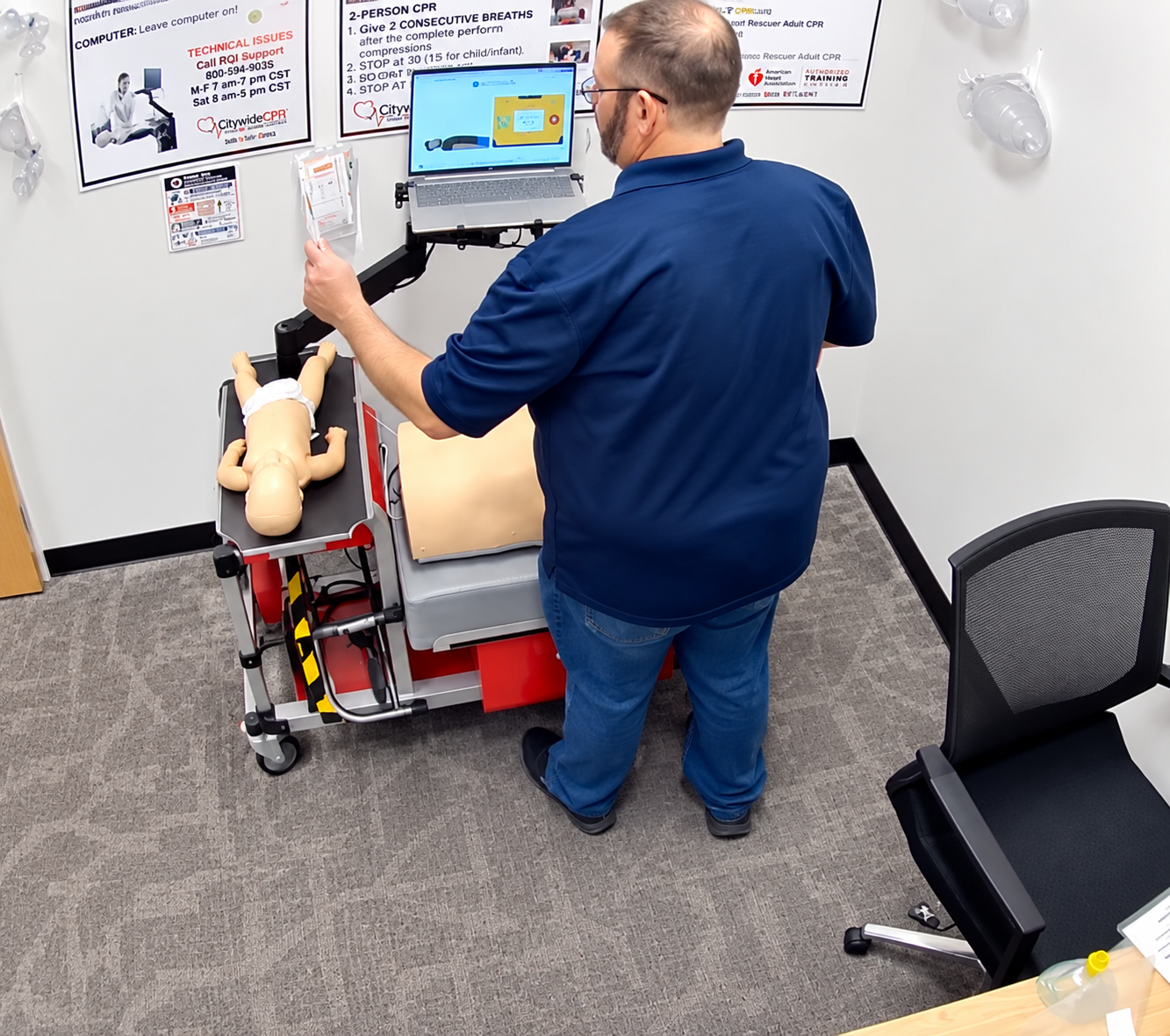
For Self-Guided Heartsaver training at participating locations, the skills session uses training technology to guide participants through the applicable hands-on experience. Current Heartsaver Direct Self-Guided training supports Adult and Child CPR, but Infant CPR is not available through that option.
Can Businesses Schedule Onsite CPR and First Aid Training?
Yes. Citywide CPR offers onsite group training for organizations that want training delivered at their workplace. This can allow an employer to coordinate training for a team without requiring every employee to independently find a separate class.
Employers can discuss their organization’s training requirements, participant needs, preferred location, and scheduling considerations through the Citywide CPR Onsite Training request page. Available courses and arrangements depend on the organization’s needs and should be confirmed with Citywide CPR.
Onsite training can be particularly useful when an organization has multiple employees who need certification, employees working different schedules, or a workplace where coordinating individual travel would be difficult.
What Training Options Does Citywide CPR Offer for Individuals and Groups?
Citywide CPR offers several ways for organizations and individuals to complete applicable American Heart Association training. The best choice depends on the number of employees, required certification, location, scheduling needs, and whether the organization prefers training at its own facility or individual appointments.
Instructor-Led Onsite Group Training
Instructor-led onsite training allows an organization to coordinate group instruction at its workplace. This format can be useful when employees need to train together and the organization wants an instructor-led experience rather than having employees schedule individual Self-Guided appointments.
Citywide CPR’s onsite training program includes options for CPR, AED, First Aid, BLS, ACLS, and PALS depending on the organization’s requirements. Organizations can submit their training needs and discuss the appropriate course and arrangement with the onsite training team.
Self-Guided Heartsaver Training at Participating Locations
For individuals and some smaller groups, Citywide CPR also offers Self-Guided Heartsaver training at select locations. Participants complete the required online learning and then attend an in-person skills session using training technology and real-time feedback.
Availability varies by course and location, so employers should not assume that every Citywide CPR station offers Heartsaver Self-Guided training. The Self-Guided CPR Training page provides current information about the available training model and participating options.
Self-Guided Heartsaver training is different from instructor-led onsite group training. With Self-Guided training, the technology guides the participant through the applicable hands-on skills experience. With instructor-led group training, an instructor leads the training experience for the group.
How Long Does Workplace CPR and First Aid Certification Take?
The total time depends on the course, delivery format, number of participants, and training requirements.
For Self-Guided Heartsaver training, participants complete the required online learning before attending their hands-on skills session. For onsite group training, the schedule is coordinated around the organization’s selected course and training requirements.
Employers should avoid choosing a course based solely on the shortest available training time. The more important question is whether the selected course provides the certification and skills required by the organization.
How Often Should Employees Renew Their CPR and First Aid Certification?
American Heart Association certification cards are generally valid for two years, but employers should also consider their own policies and any applicable industry or regulatory requirements when determining when employees need to renew.
Citywide CPR states that its CPR certifications are valid for two years. Employees should check the expiration date on their current AHA eCard and allow enough time to complete the appropriate renewal requirements before their credential expires.
Organizations with multiple employees may also benefit from tracking expiration dates and planning training in advance rather than waiting until an entire team’s certifications are close to expiration.
How to Choose CPR and First Aid Training for Your Workplace
Start by identifying what your employees actually need. Consider whether they are healthcare professionals or non-healthcare employees, whether First Aid is required in addition to CPR/AED, how many people need training, and whether employees need to train together.
For a non-healthcare workplace, Heartsaver CPR AED or Heartsaver First Aid CPR AED may be appropriate depending on the organization’s requirements. A healthcare organization may instead need BLS, ACLS, PALS, or a combination of healthcare-provider certifications.
Also consider the delivery format. An employer that wants employees trained together may prefer onsite instructor-led group training, while an organization that wants employees to complete training individually may consider Self-Guided options available at participating locations.
For organizations exploring portable training solutions, Citywide CPR also offers RQI-P GO options for qualifying organizations. This portable Self-Guided system is distinct from a traditional instructor-led onsite class and should be discussed with Citywide CPR to determine whether it fits the organization’s requirements.
Schedule Workplace CPR, AED and First Aid Training with Citywide CPR
Whether you are an HR manager coordinating employee certification, a safety coordinator planning emergency preparedness training, an office manager onboarding new employees, or a business owner looking for workplace CPR and First Aid training, the first step is identifying the certification your organization actually requires.
Citywide CPR can help organizations explore individual, onsite, and other applicable training options. For a group that wants training delivered at its own workplace, start with the Citywide CPR Onsite Training request page and provide information about your organization, training needs, participant count, location, and preferred timing.
For workplace CPR, AED and First Aid options specifically, you can also review CPR & First Aid Training for Staff to explore available Heartsaver solutions for employees and organizations.
The right training solution depends on your employees, your workplace, and the certification requirements that apply to your organization. Citywide CPR can help you determine which available training option best fits those needs.