Starting a new healthcare position is exciting, but it often comes with a long checklist of requirements. Between onboarding paperwork, training modules, scheduling, and preparing for your new role, obtaining or renewing your CPR certification can feel like one more task competing for your time.
Whether you’re a recent graduate, an experienced healthcare professional changing employers, or returning to clinical practice, understanding your certification requirements can help make the transition smoother.
Which Certification Do You Need?
The certification required for your position depends on your role, employer, and patient population.
BLS (Basic Life Support)
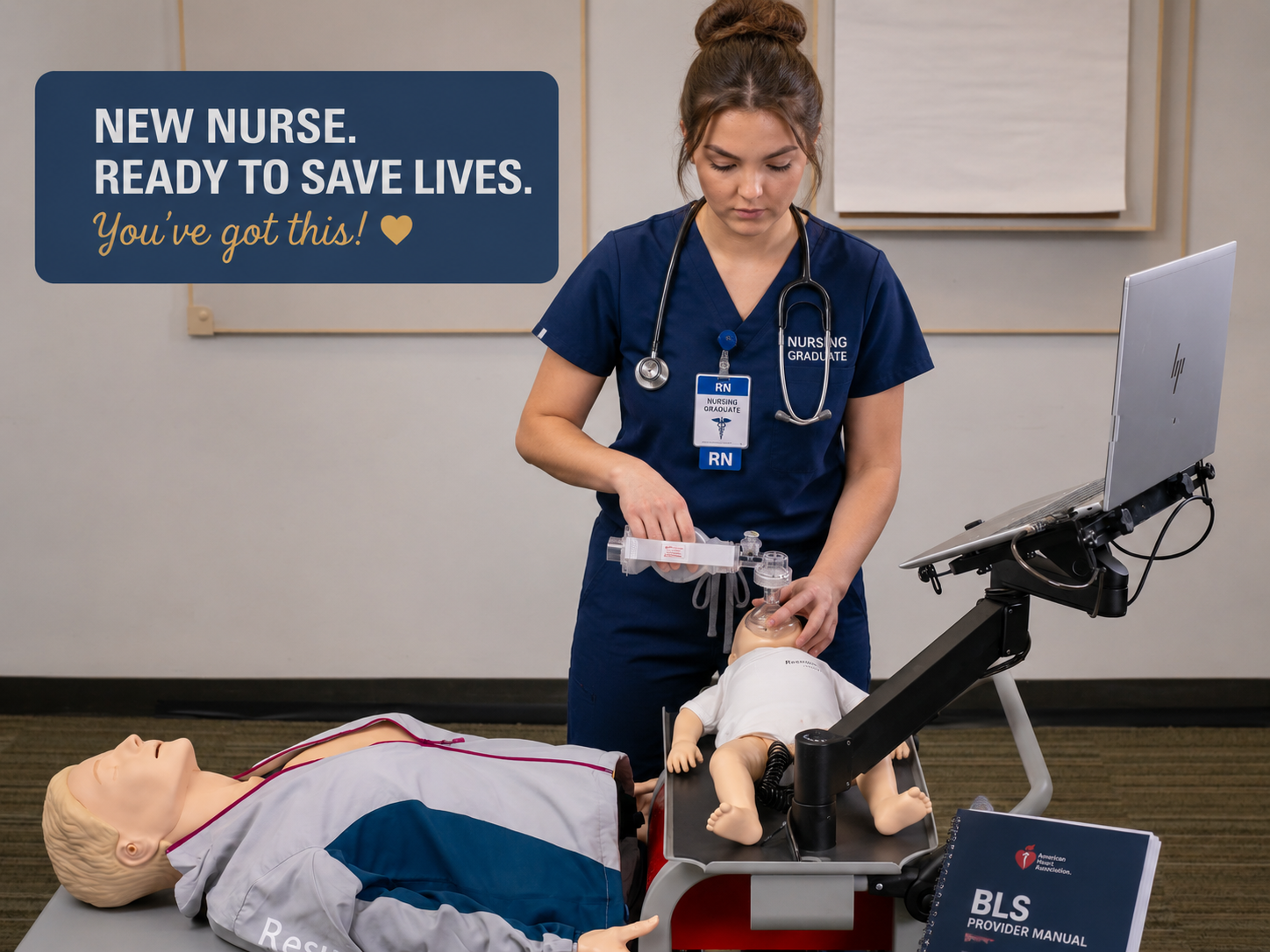
BLS certification is commonly required for healthcare professionals who may need to recognize and respond to cardiac arrest, respiratory emergencies, or choking incidents.
Healthcare professionals who often require BLS include:
• Registered Nurses (RNs)
• Licensed Practical Nurses (LPNs)
• Certified Nursing Assistants (CNAs)
• Medical Assistants
• Dental Professionals
• Physical Therapists
• Occupational Therapists
• Healthcare Students
ACLS (Advanced Cardiovascular Life Support)
ACLS builds upon BLS and focuses on the management of adult cardiovascular emergencies.
ACLS may be required for:
• Emergency Department staff
• ICU and critical care personnel
• Physicians
• Paramedics
• Respiratory Therapists
• Certain nursing specialties
• Some medical students, residents, and advanced clinical programs
PALS (Pediatric Advanced Life Support)
PALS focuses on the recognition and treatment of critically ill infants and children.
PALS may be required for:
• Pediatric Nurses
• Pediatric Emergency Department Staff
• Pediatric ICU Staff
• Pediatric Physicians
• Healthcare professionals who regularly care for pediatric patients
Common Challenges When Starting a New Position
Many healthcare professionals discover they need certification quickly after accepting a new role.
Common challenges include:
• Orientation deadlines
• Expiring certifications
• Limited availability for traditional classroom courses
• Balancing work, family, and onboarding responsibilities
• Finding a convenient training location
A Faster, More Flexible Certification Experience
Many healthcare professionals choose a blended learning format that combines online coursework with a hands-on skills session.
This approach allows students to:
✔ Complete the online portion at their own pace
✔ Schedule a skills session at a convenient time
✔ Demonstrate hands-on CPR skills using objective feedback technology
✔ Receive an American Heart Association eCard upon successful completion
For busy healthcare professionals, this can be a convenient alternative to spending an entire day in a classroom.
Ready to get started? Explore our BLS, ACLS, and PALS certification options or find a location near you.
Starting a new healthcare job comes with plenty of responsibilities. Completing your BLS, ACLS, or PALS certification doesn’t have to be one of the difficult ones.
Citywide CPR is an American Heart Association Training Center offering certification options at locations nationwide. With flexible scheduling and convenient appointment times, healthcare professionals can complete their certification requirements and focus on what matters most—caring for patients.
Ready to get started? Explore our certification options and find a location near you.