If your nursing school or healthcare program just told you, “You need BLS before clinicals,” the first step is to confirm exactly which certification they require. For many nursing, medical, dental, respiratory therapy, and allied health programs, that requirement is American Heart Association BLS Certification for healthcare providers.
If your program specifically requires AHA BLS, don’t register for a general CPR or Heartsaver course just because it includes CPR. They are different courses and may not satisfy your clinical requirement.
Citywide CPR provides American Heart Association BLS Certification with flexible skills appointments at locations nationwide, making it easier to complete your certification when your clinical deadline is approaching.
I Need BLS for Clinicals—Which Course Should I Take?
If your school says you need American Heart Association BLS, look for a BLS course specifically designed for healthcare professionals rather than a general CPR course.
BLS training is intended for healthcare providers and healthcare students who may need to respond to cardiac or respiratory emergencies in a clinical setting.
The course covers important skills such as high-quality CPR, AED use, ventilations, and other components of Basic Life Support that healthcare providers are expected to understand.
Before registering, check the exact wording provided by your nursing school, clinical coordinator, or healthcare program. If it specifies American Heart Association BLS, choose an AHA BLS course.
Does Nursing School Require American Heart Association BLS?
Requirements vary by school and clinical program, but many nursing programs specifically require students to maintain current American Heart Association BLS Certification before beginning clinical rotations.
This is important because clinical students may be working in hospitals and other healthcare environments where they could encounter a patient experiencing cardiac or respiratory arrest.
BLS training helps students learn the evidence-based resuscitation skills expected in healthcare settings.
Don’t assume that every CPR certification will meet your school’s requirement. Verify the required training organization and course before registering.
Is BLS the Same as Regular CPR Certification?
Not exactly.
“BLS” stands for Basic Life Support, and CPR is a major component of BLS. However, BLS training is designed specifically for healthcare professionals and others who may respond to emergencies in a clinical environment.
General CPR courses, including certain Heartsaver courses, are designed for different audiences.
This distinction matters when you’re preparing for clinicals. If your nursing school requires BLS, submitting a different type of CPR certification could result in your documentation being rejected.
The safest approach is simple: match the course you register for to the exact certification listed in your clinical requirements.
Can I Complete Part of My BLS Certification Online?
Yes, if you select an American Heart Association blended-learning option.
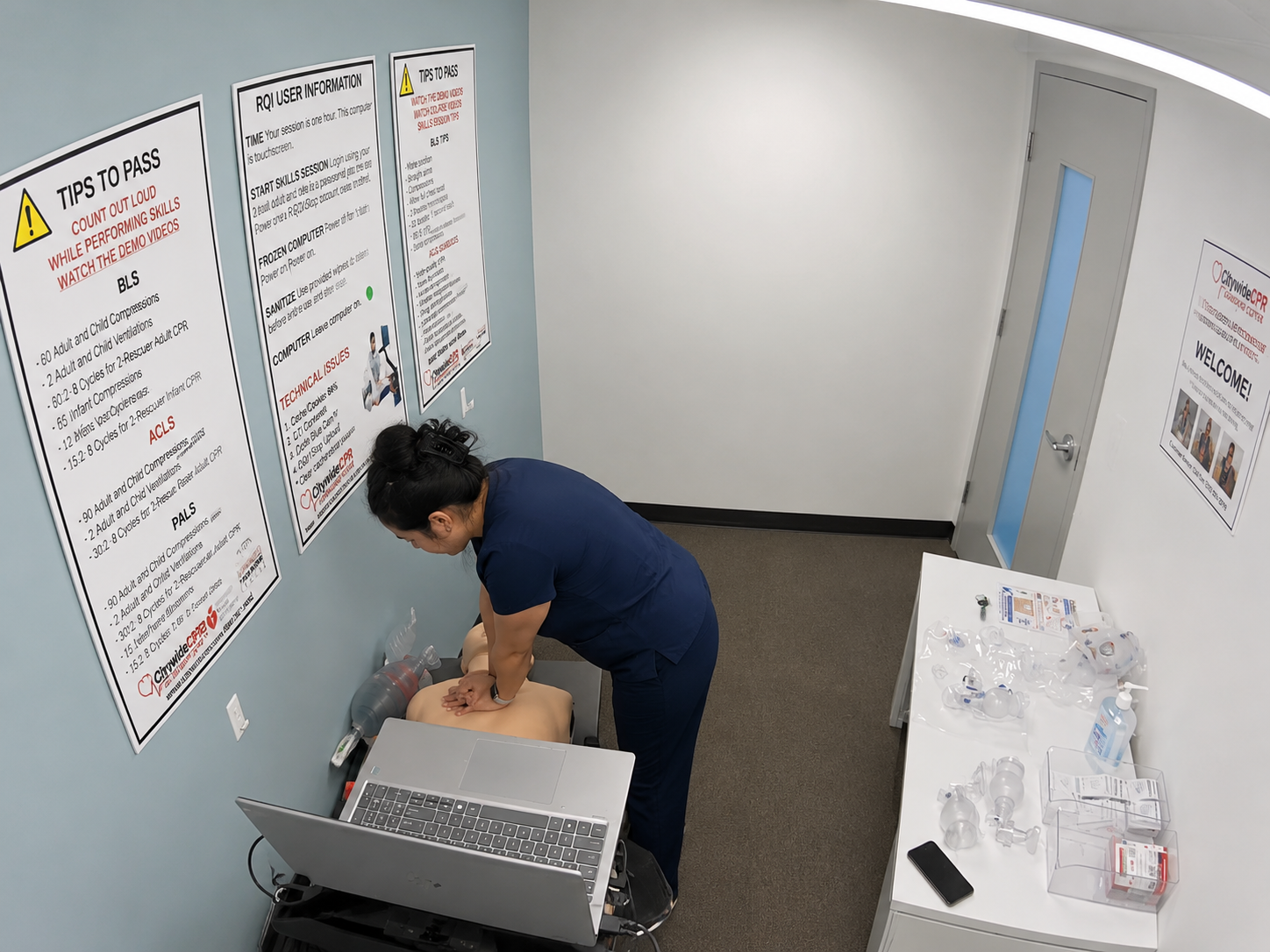
With this format, the educational portion is completed online before your appointment. You then attend a scheduled hands-on skills session to demonstrate the required BLS skills.
This can be particularly convenient for nursing and healthcare students because the online portion can be completed around classes, exams, work, and other school responsibilities.
The hands-on portion still matters. A fully online course without the required hands-on skills component may not satisfy a program that requires official American Heart Association BLS Certification.
What Should I Do Before My BLS Skills Session?
Complete your required online coursework before arriving for your scheduled skills session.
It can also help to review the skills you’ll be expected to demonstrate. Citywide CPR provides an American Heart Association BLS, ACLS & PALS Skills Demonstration Video Library where participants can preview key hands-on skills before their appointment.
Watching the demonstrations won’t replace the required course, but it can make the skills session feel more familiar—especially if this is your first healthcare certification.
Before your appointment, make sure you have also reviewed any instructions provided with your registration.
How Quickly Can I Get BLS Certified for Clinicals?
If your clinical deadline is approaching, start by completing your online coursework and finding the earliest skills appointment that fits your schedule.
Citywide CPR offers flexible appointment scheduling at locations nationwide, making it possible for many healthcare students to find options that work around school, employment, and clinical schedules.
Don’t wait until the night before your documentation is due. Clinical programs may have their own deadlines for reviewing and approving certification records, so completing BLS ahead of the school’s submission deadline gives you additional time if documentation needs to be uploaded or verified.
What If My Clinical Coordinator Says My Current CPR Card Isn’t Accepted?
Check the certification card and compare it with your school’s requirements.
A common problem occurs when a student has completed CPR training but the clinical program specifically requires American Heart Association BLS Certification. Having CPR training does not automatically mean you have the specific BLS credential your program requested.
If you’re unsure, send your program the name of the course you’re considering before registering or ask whether they specifically require AHA BLS.
Taking a few minutes to verify the requirement can prevent you from paying for—and completing—the wrong course.
Do I Need ACLS or PALS for Clinical Rotations Too?
Most students should follow the exact certification requirements supplied by their program rather than registering for additional courses unnecessarily.
Some advanced healthcare programs, clinical placements, or employers may require ACLS Certification or PALS Certification in addition to BLS.
ACLS focuses on advanced cardiovascular emergencies, while PALS addresses the assessment and management of critically ill or injured pediatric patients.
If your clinical paperwork lists BLS only, start with BLS. If it lists BLS plus ACLS or PALS, Citywide CPR offers all three American Heart Association certification programs.
Where Can I Get BLS Certification for Clinicals Near Me?
Citywide CPR offers American Heart Association BLS Certification at convenient locations nationwide.
This can be particularly helpful for healthcare students who attend school in one city but live, work, or complete clinical rotations somewhere else.
Use the Citywide CPR location finder to identify a nearby training center, then review available BLS options and appointment times.
Frequently Asked Questions About BLS for Clinicals
I need BLS for nursing school. What course should I take?
If your nursing school specifically requires American Heart Association BLS, register for an AHA BLS Certification course for healthcare providers. Don’t substitute a general CPR or Heartsaver course unless your school confirms that it is accepted.
Can I get BLS certified online for nursing clinicals?
American Heart Association blended learning allows you to complete the educational portion online, followed by the required hands-on BLS skills session. If your school requires official AHA BLS Certification, make sure the option you select results in the credential your program requires.
How fast can I get BLS certified before clinicals?
Timing depends on completing the required coursework and appointment availability. Citywide CPR offers flexible skills appointments at locations nationwide, so students with approaching clinical deadlines should check nearby availability as soon as possible.
What happens if my BLS expires during nursing school?
Your clinical program may require your BLS Certification to remain current while you participate in clinical rotations. If your certification is approaching expiration, review your school’s policy and schedule your BLS renewal before it creates a problem with clinical eligibility.
Is Heartsaver CPR accepted for nursing school clinicals?
Not necessarily. Heartsaver and BLS are different American Heart Association courses intended for different audiences. If your program specifies BLS Certification, register for BLS unless the school tells you otherwise.
Where can I find American Heart Association BLS Certification near me?
Citywide CPR offers BLS Certification at training locations nationwide. Use the Citywide CPR location finder to find a nearby training center and review available appointments.
Conclusion
If you’ve been told “I need BLS for clinicals,” don’t make the process more complicated than it needs to be.
First, verify that your program requires American Heart Association BLS Certification. Next, choose the correct BLS course, complete the required online coursework when using a blended-learning option, and attend your hands-on skills session. Finally, make sure you have the certification documentation your school requires before its clinical deadline.
Taking the correct course the first time can help you avoid delays and get one important clinical requirement checked off your list.
Need American Heart Association BLS Certification for nursing school or clinical rotations?
Citywide CPR offers flexible BLS skills appointments at convenient locations nationwide, making it easier to complete your certification around classes, work, and upcoming clinical deadlines.
BLS Certification
https://www.citywidecpr.com/bls-certification/
Find a Citywide CPR Location Near You
https://www.citywidecpr.com/locate-us/
If your program also requires advanced certification:
ACLS Certification
https://www.citywidecpr.com/acls-certification/
PALS Certification
https://www.citywidecpr.com/pals-certification/