If you’re a nursing director, hospital educator, clinical manager, or healthcare administrator searching “How can I get my staff BLS, ACLS, or PALS certified without sending everyone off campus?”, there is a more flexible option.
Citywide CPR offers nationwide onsite American Heart Association training using the portable RQI-P GO Simulation Station. The system allows healthcare organizations to bring CPR skills training directly to their facility rather than coordinating travel for nurses, physicians, respiratory therapists, EMS personnel, and other clinical staff.
For hospitals and healthcare systems trying to protect staffing levels, reduce time away from patient care, or manage large renewal cycles, the RQI-P GO model can provide a practical solution.
How Can Hospitals Keep Staff on Campus for CPR Training?
For many healthcare employers, the biggest problem with CPR certification isn’t the training itself. It’s getting employees away from the floor long enough to complete it.
Sending nurses, physicians, respiratory therapists, or other staff to an offsite training center can create:
- Shift coverage problems
- Lost productive time
- Travel between facilities
- Overtime or scheduling complications
- Delays during large renewal periods
- Added coordination for education departments
The portable RQI-P GO Simulation Station allows Citywide CPR to bring the hands-on training component directly to your organization.
That means staff can remain on campus and complete required skills training closer to where they already work.
What Is the RQI-P GO Simulation Station?
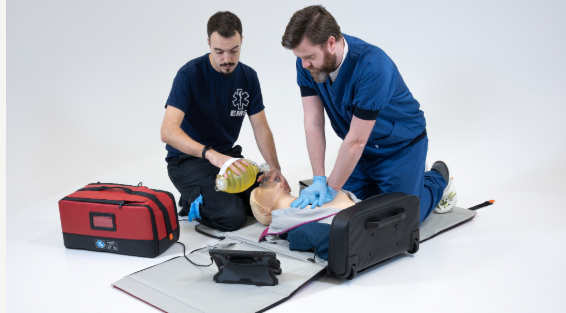
The RQI-P GO Simulation Station is a portable CPR simulation system designed specifically for mobile use.
It provides the same training capabilities as the stationary simulation station while adding the flexibility to move between facilities or departments.
The system can be used on a floor or table and incorporates the same core simulation technology found in the stationary version.
For healthcare systems, this portability makes it possible to bring training to satellite clinics, surgery centers, stand-alone emergency departments, critical access hospitals, and other locations where sending staff to a central training center may be inconvenient.
Which Healthcare Organizations Benefit Most from the RQI-P GO?
The portable system is particularly useful for organizations where staff are spread across multiple facilities or where leaving the workplace creates operational challenges.
Examples include:
- Hospitals
- Healthcare systems
- Nursing departments
- Outpatient clinics
- Ambulatory surgery centers
- Stand-alone emergency departments
- Critical access hospitals
- Long-term care facilities
- EMS organizations
- Public safety agencies
- Multi-campus healthcare systems
- Specialty medical facilities
For these organizations, bringing training onsite can be more practical than trying to coordinate separate trips to outside training locations.
Can Citywide CPR Provide BLS, ACLS, and PALS Onsite?
Yes. Citywide CPR can help healthcare organizations arrange onsite training for:
- American Heart Association BLS Certification
- American Heart Association ACLS Certification
- American Heart Association PALS Certification
This is especially useful for employers whose staff maintain more than one credential.
A hospital may have nurses who require BLS and ACLS, pediatric staff who also need PALS, or different departments with different certification requirements.
Citywide CPR can work with the organization to help coordinate the appropriate training solution for each group.
Why Is Onsite Training Useful for Nursing Directors?
Nursing directors and education teams often manage large groups of employees with different schedules, renewal dates, and patient-care responsibilities.
Onsite training can simplify that process.
Rather than sending employees individually to outside training centers, organizations can coordinate skills sessions around existing staffing patterns and department needs.
This may help with:
- New-hire onboarding
- Annual competency planning
- Upcoming certification expirations
- Large departmental renewal cycles
- New facility openings
- Staffing transitions
- Clinical education initiatives
For nursing leadership, the value is not just convenience. It’s reducing disruption to operations while still maintaining required certification standards.
How Does the RQI-P GO Help Reduce Time Away From Patient Care?
Healthcare staff are often difficult to remove from the floor, especially during periods of high census, staffing shortages, or busy clinical operations.
With the RQI-P GO Simulation Station, the training comes to the facility.
That can reduce:
- Driving time
- Parking time
- Travel between campuses
- Time spent waiting at an external site
- The need to schedule an entire offsite training day
Keeping staff closer to their unit or facility can make certification more manageable for both employees and leadership.
Can the RQI-P GO Move Between Hospital Campuses?
Yes. Portability is one of its main advantages.
The system is designed for mobile use, making it well suited for healthcare systems with:
- Multiple hospital campuses
- Satellite clinics
- Surgery centers
- Regional offices
- Outpatient facilities
- Stand-alone emergency departments
A healthcare organization can discuss a plan with Citywide CPR to use the portable solution across different sites rather than relying on one central training location.
Can Staff Complete BLS, ACLS, and PALS Without Leaving the Facility?
For appropriate onsite training arrangements, yes.
Citywide CPR can bring the portable RQI-P GO system directly to the healthcare facility so employees can complete the required hands-on skills portion onsite.
This can be especially valuable when employers want to reduce offsite travel or when multiple staff members need certification during the same timeframe.
The exact training setup depends on the organization, course requirements, number of participants, and scheduling needs.
What If Only a Few Employees Need Certification?
Onsite training isn’t always the best answer.
If only one or two employees need BLS, ACLS, or PALS certification, sending them to a nearby Citywide CPR training location may be faster and simpler.
Citywide CPR offers both options:
- Nearby training locations for individuals and small groups
- Onsite RQI-P GO training for departments, facilities, and larger healthcare groups
The right solution depends on your staffing needs and how many employees require certification at the same time.
Why Work With Citywide CPR for Healthcare Staff Training?
Healthcare employers need more than a generic CPR class. They need a training partner that understands staffing, clinical schedules, credentialing, and the realities of healthcare operations.
Citywide CPR provides American Heart Association BLS, ACLS, and PALS training nationwide and can help organizations determine whether onsite RQI-P GO training or individual training-center appointments make more sense.
For healthcare systems trying to keep staff on campus, that flexibility can significantly simplify the certification process.
Frequently Asked Questions About Onsite BLS, ACLS, and PALS Training
Can Citywide CPR come to our hospital for BLS training?
Yes. Citywide CPR offers nationwide onsite training solutions for healthcare organizations and can bring the portable RQI-P GO Simulation Station directly to the facility.
Can nurses complete ACLS without leaving the hospital?
With an appropriate onsite training arrangement, Citywide CPR can bring ACLS skills training to the facility using the portable RQI-P GO system, reducing the need for employees to travel off campus.
Can we train an entire nursing department onsite?
Yes. Onsite training can be especially useful for departments with multiple employees who need certification or renewal during a similar timeframe.
Can we do BLS, ACLS, and PALS onsite?
Citywide CPR provides American Heart Association BLS, ACLS, and PALS training solutions for healthcare organizations. The exact onsite arrangement depends on the organization’s needs and course requirements.
Is onsite training better than sending staff to a training center?
It depends on group size and scheduling needs. Smaller groups may be better served by nearby Citywide CPR locations, while larger departments or healthcare systems often benefit from onsite training.
Can the RQI-P GO be used at multiple facilities?
Yes. The portable design makes it well suited for healthcare systems with multiple campuses, satellite locations, and off-main-campus facilities.
Conclusion
If you’re responsible for keeping healthcare staff certified while also keeping them on campus, traditional offsite training may not always be the best solution.
The RQI-P GO Simulation Station gives Citywide CPR a portable way to bring American Heart Association BLS, ACLS, and PALS skills training directly to hospitals, clinics, nursing departments, and other healthcare facilities.
For nursing directors, clinical educators, hospital administrators, and healthcare systems managing large teams, onsite training can reduce travel, simplify scheduling, and minimize time away from patient care.
Citywide CPR can help determine whether onsite RQI-P GO training or nearby individual appointments are the best fit for your organization.
Need to keep your healthcare staff BLS, ACLS, or PALS certified without sending them off campus?
Citywide CPR offers nationwide onsite American Heart Association training using the portable RQI-P GO Simulation Station.
Tell us:
- How many employees need training
- Which certifications they require
- Where your facility is located
- Whether you have multiple campuses
- How quickly training needs to be completed
We’ll help you determine the most practical training solution for your organization.
Request Onsite Healthcare Staff Training
https://www.citywidecpr.com/onsitetraining/
BLS Certification
https://www.citywidecpr.com/bls-certification/
ACLS Certification
https://www.citywidecpr.com/acls-certification/
PALS Certification
https://www.citywidecpr.com/pals-certification/
Find a Citywide CPR Training Location
https://www.citywidecpr.com/locate-us/