What CPR certification do nurses need? For many nursing positions, the starting requirement is American Heart Association BLS Certification, but some nurses may also need ACLS, PALS, or both depending on their employer, department, patient population, and clinical responsibilities.
There is no single certification combination that applies to every nurse.
A nurse working in an outpatient medical office may have different requirements than an ICU nurse, emergency department nurse, pediatric nurse, or critical care transport nurse.
The safest approach is:
Check your employer’s exact requirements → Confirm whether you need BLS, ACLS, PALS, or a combination → Complete the appropriate courses → Maintain each required credential before it expires
Citywide CPR is an American Heart Association Training Center offering BLS, ACLS, and PALS Certification at convenient locations nationwide.
Do Nurses Need BLS Certification?
Many nurses are required by their employer to maintain BLS Certification, especially when working in patient-care settings.
BLS stands for Basic Life Support and is designed for healthcare professionals and others who may respond to cardiac or respiratory emergencies.
For nurses, BLS may include skills such as:
- High-quality CPR
- AED use
- Ventilation
- Team-based response
- Recognition of cardiac arrest
- Basic resuscitation skills for different patient age groups
However, the employer determines whether BLS is required for a specific position.
If your hospital, clinic, nursing program, or credentialing department specifies American Heart Association BLS, choose the appropriate AHA BLS course.
Internal Link — BLS Certification
https://www.citywidecpr.com/bls-certification/
Is BLS the Same as Regular CPR Certification for Nurses?
Not necessarily.
BLS includes CPR, but a general CPR course and a healthcare-provider BLS course are not automatically interchangeable.
This distinction matters because hospitals and healthcare employers may specifically require BLS rather than a general CPR credential.
If your employer tells you that you need BLS, do not choose a different CPR course simply because it appears more convenient or is available sooner.
Check the exact wording of the requirement and match the course to what your employer accepts.
Which Nurses May Need ACLS Certification?
ACLS Certification may be required for nurses whose roles involve advanced cardiovascular emergency care.
Common examples may include nurses working in:
- Emergency departments
- Intensive care units
- Critical care
- Cardiac units
- Cath labs
- Procedural areas
- Transport teams
- Other settings where advanced cardiovascular resuscitation responsibilities are part of the role
ACLS builds on foundational life support concepts and focuses on the recognition and management of serious cardiovascular emergencies.
Not every nurse needs ACLS.
If your employer lists ACLS as a required credential, maintain it separately from any BLS requirement.
Internal Link — ACLS Certification
https://www.citywidecpr.com/acls-certification/
Do I Still Need BLS If I Have ACLS?
Possibly yes.
Having ACLS does not automatically mean your employer no longer requires BLS.
BLS and ACLS are separate American Heart Association certifications with different purposes. Many nurses are required to maintain both.
If your credentialing checklist lists both BLS and ACLS, keep both current.
Do not assume that a more advanced credential automatically replaces another certification unless your employer explicitly tells you that it does.
Which Nurses May Need PALS Certification?
PALS Certification may be required for nurses who work with infants and children in settings where pediatric emergencies may occur.
Examples may include:
- Pediatric units
- Pediatric emergency departments
- PICU
- Pediatric transport teams
- Mixed emergency departments
- Other clinical settings where nurses care for critically ill or injured pediatric patients
PALS is not automatically required for every nurse who occasionally sees children.
Your employer, facility, or clinical department determines whether PALS is required for your role.
Internal Link — PALS Certification
https://www.citywidecpr.com/pals-certification/
Do I Still Need BLS If I Have PALS?
Possibly.
PALS does not automatically replace a separate BLS requirement.
A nurse may be required to maintain both BLS and PALS because the two courses address different levels and types of resuscitation training.
If your employer requires both credentials, keep both current.
Again, the safest approach is to follow your organization’s written certification requirements rather than assume one course substitutes for another.
Can Nurses Need BLS, ACLS and PALS at the Same Time?
Yes. Some nurses may be required to maintain all three certifications.
This is more common in roles where nurses care for both adult and pediatric patients or work in high-acuity environments.
A nurse working in emergency medicine, critical care, transport, or another advanced clinical setting may be required by the employer to maintain:
BLS + ACLS
BLS + PALS
or
BLS + ACLS + PALS
If you need multiple certifications, coordinating them can reduce separate registrations, travel, and scheduling.
Citywide CPR offers eligible bundle options for healthcare professionals who need more than one certification.
What CPR Certification Does an ER Nurse Need?
Emergency department nurses often work with patients experiencing cardiac, respiratory, and other life-threatening emergencies.
Because of that, employers may require a combination of certifications such as BLS and ACLS, and some emergency nurses may also need PALS when pediatric patients are treated in the department.
However, requirements differ by hospital and role.
Do not assume that every ER nurse everywhere needs the same combination.
Check your hospital’s credentialing requirements and renew the exact certifications listed for your position.
What CPR Certification Does an ICU Nurse Need?
ICU nurses frequently care for critically ill patients and may participate in advanced resuscitation events.
Many employers require ICU nurses to maintain BLS and ACLS.
Depending on the patient population, additional certification such as PALS may also be required.
Again, employer requirements control.
If you are starting a new ICU position, review your onboarding or credentialing documentation before registering for courses.
What Certification Does a Pediatric Nurse Need?
Pediatric nurses may be required to maintain BLS and PALS, depending on the clinical setting and employer.
A pediatric nurse working in a high-acuity environment may have different requirements than someone working in a lower-acuity outpatient setting.
If your employer specifies PALS, make sure you register for the appropriate American Heart Association PALS course.
Do not assume that PALS automatically eliminates a separate BLS requirement.
Do Nurses in Medical Offices Need BLS?
Some outpatient medical practices require nurses to maintain BLS, while requirements can vary by employer and setting.
A nurse working in a physician office, specialty clinic, ambulatory practice, or procedural setting should confirm the exact credential required by the organization.
If the employer requires American Heart Association BLS, Citywide CPR offers flexible BLS Certification appointments at locations nationwide.
Smaller medical practices can also direct employees individually to nearby Citywide CPR Verification Stations rather than coordinating one large traditional class.
For organizations managing certification for multiple employees, consider linking to:
CPR Training for Healthcare Staff – BLS, ACLS & PALS
https://www.citywidecpr.com/cpr-training-for-healthcare-staff/
What CPR Certification Do Travel Nurses Need?
Travel nurses should review the requirements provided by the staffing agency, hospital, and assignment.
A travel nurse may need multiple current credentials before beginning a contract.
Depending on the assignment, those requirements may include:
- BLS
- ACLS
- PALS
- Other specialty-specific certifications
Because travel assignments can involve tight onboarding deadlines, it is especially important to check expiration dates well in advance.
If a required certification is approaching expiration, complete renewal before the assignment start date when possible.
What If I Am a New Nurse and Don’t Know Which Certifications I Need?
Start with your employer.
Your nursing license or degree alone does not tell you which American Heart Association certifications a particular employer requires.
Ask your:
- Nurse manager
- HR department
- Credentialing team
- Clinical educator
- Hiring manager
- Orientation coordinator
for the exact certification list.
If your paperwork says AHA BLS, choose BLS.
If it also says ACLS or PALS, complete those additional requirements as well.
Avoid purchasing extra certifications you do not need simply because they are available.
Can Nurses Renew BLS, ACLS and PALS Together?
If several required certifications are approaching expiration around the same time, coordinating them can simplify renewal.
Instead of treating each certification as a completely separate task, you may be able to organize multiple courses and skills sessions together.
This can mean:
- Fewer trips
- Fewer separate registrations
- Easier scheduling
- More organized certification tracking
- Less disruption to work schedules
Citywide CPR offers bundle options for eligible healthcare professionals who need multiple certifications.
Are There Discounts for Nurses Who Need Multiple Certifications?
If you already need multiple eligible certifications, Citywide CPR currently offers bundle savings.
Need Two Eligible Certifications?
Use:
DOUBLEBUNDLE20 — $20 OFF
for an eligible two-course package.
Need BLS + ACLS + PALS?
Use:
TRIPLEBUNDLE30 — $30 OFF
for the eligible three-course package.
The discount should not determine which courses you take. Confirm your actual requirements first, then use the applicable bundle if you already need multiple certifications.
For discount-focused search intent, cross-link to the dedicated Citywide CPR bundle-discount article once published.
How Do Nurses Complete BLS, ACLS or PALS Through Citywide CPR?
The process depends on the certification and course option selected.
For eligible blended-learning options, participants complete required online coursework before attending their scheduled hands-on skills session.
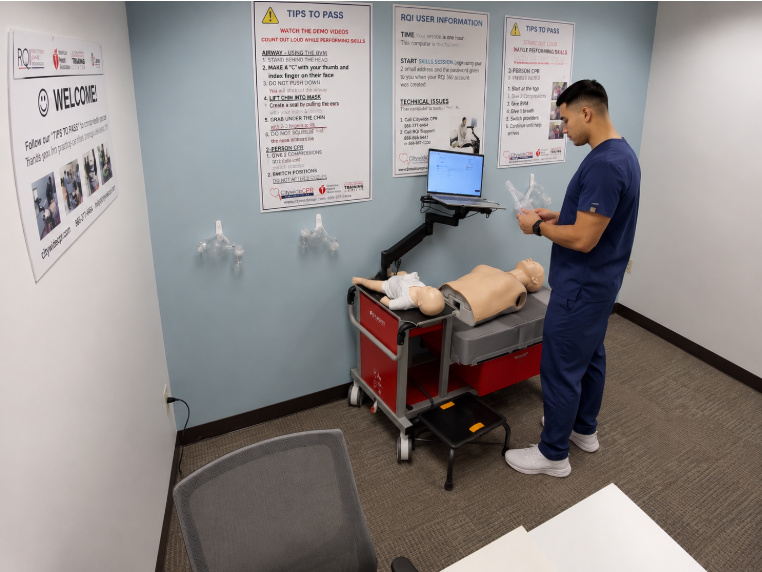
Citywide CPR Verification Stations allow healthcare professionals to complete the required hands-on portion using American Heart Association-compliant simulation technology.
Nurses can schedule appointments around work shifts rather than relying only on large traditional classroom schedules.
Find a Citywide CPR Verification Station:
https://www.citywidecpr.com/locate-us/
Can Nurses Get Same-Day AHA eCards?
Citywide CPR provides Same-Day AHA eCards after successful completion of all required course components.
This can be especially helpful for nurses completing certification for:
- New employment
- Hospital onboarding
- Credentialing
- Travel assignments
- Department transfers
- Renewal deadlines
Same-Day eCard issuance does not remove any required coursework or skills components. All applicable course requirements must be successfully completed first.
What If My BLS Has Already Expired?
If your BLS Certification has already expired, begin the appropriate renewal process promptly.
Your employer determines whether an expired credential affects your ability to work.
Do not assume that a grace period automatically applies.
Where Can Nurses Get AHA BLS, ACLS or PALS Near Me?
Citywide CPR offers American Heart Association certification options at locations nationwide.
Use the Citywide CPR location finder to identify a convenient Verification Station near your home, hospital, workplace, or clinical facility.
Locate Us
https://www.citywidecpr.com/locate-us/
If you’re renewing several certifications, review all of your expiration dates before scheduling so you can determine whether coordinating multiple courses makes sense.
Frequently Asked Questions About CPR Certification for Nurses
What CPR certification do nurses usually need?
Many nursing positions require BLS Certification, but ACLS, PALS, or both may also be required depending on the employer, department, and patient population.
Do all nurses need ACLS?
No. ACLS requirements vary by employer and role. Nurses working in emergency, critical care, cardiac, or other advanced clinical settings may be more likely to require ACLS.
Do all nurses need PALS?
No. PALS is more commonly relevant to nurses caring for pediatric patients or working in environments where pediatric emergencies may occur. Employer requirements vary.
Do I need BLS if I already have ACLS?
Possibly yes. ACLS does not automatically replace a separate BLS requirement. Follow your employer’s credentialing requirements.
Do I need BLS if I already have PALS?
Possibly. PALS and BLS are different certifications. If your employer requires both, maintain both.
Can nurses take BLS and ACLS together?
Yes. Nurses who need both certifications can coordinate multiple courses and skills sessions through Citywide CPR when appropriate.
Can nurses take BLS, ACLS and PALS together?
Yes. Healthcare professionals who need all three can coordinate the certifications rather than treating each one as a completely separate task.
Where can nurses get American Heart Association BLS near me?
Citywide CPR offers BLS Certification through Verification Stations at locations nationwide. Use the Citywide CPR location finder to identify a nearby option.
Conclusion
What CPR certification do nurses need? For many nurses, BLS is the foundational requirement, but some roles may also require ACLS, PALS, or both.
The correct answer depends on your employer, department, patient population, and clinical responsibilities.
Start by checking your written credentialing requirements. Then complete the exact American Heart Association certifications your position requires and keep each one current.
Citywide CPR provides BLS, ACLS, and PALS Certification at convenient Verification Stations nationwide, with flexible skills appointments designed around healthcare schedules.
If you need multiple certifications, you may also be able to coordinate them together rather than managing each credential separately.
Need American Heart Association certification for your nursing position?
Start with the certification your employer requires:
BLS Certification
https://www.citywidecpr.com/bls-certification/
ACLS Certification
https://www.citywidecpr.com/acls-certification/
PALS Certification
https://www.citywidecpr.com/pals-certification/
Then find a convenient training location:
Find a Citywide CPR Verification Station
https://www.citywidecpr.com/locate-us/
If you manage certification for an entire nursing department or healthcare team:
CPR Training for Healthcare Staff – BLS, ACLS & PALS
https://www.citywidecpr.com/cpr-training-for-healthcare-staff/