BLS EDUCATIONAL GUIDE
What Is Infant CPR Guide?
Review infant CPR concepts before beginning your HeartCode BLS eLearning course.
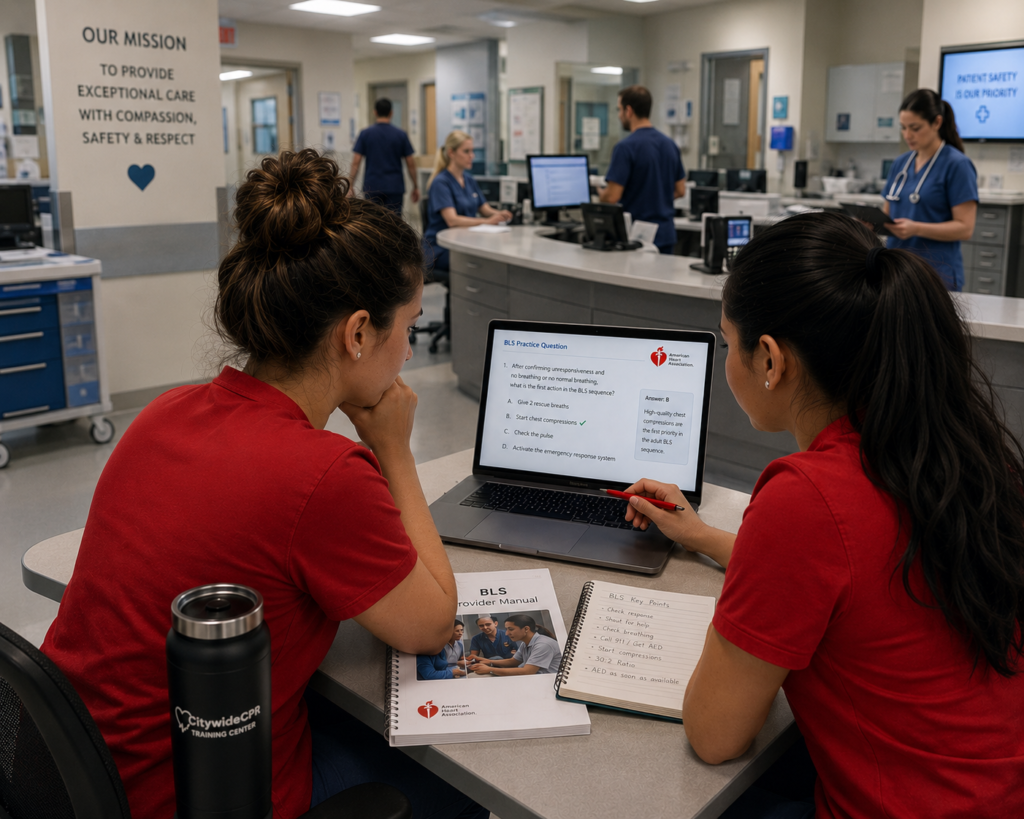
Review infant CPR concepts before beginning your HeartCode BLS eLearning course.
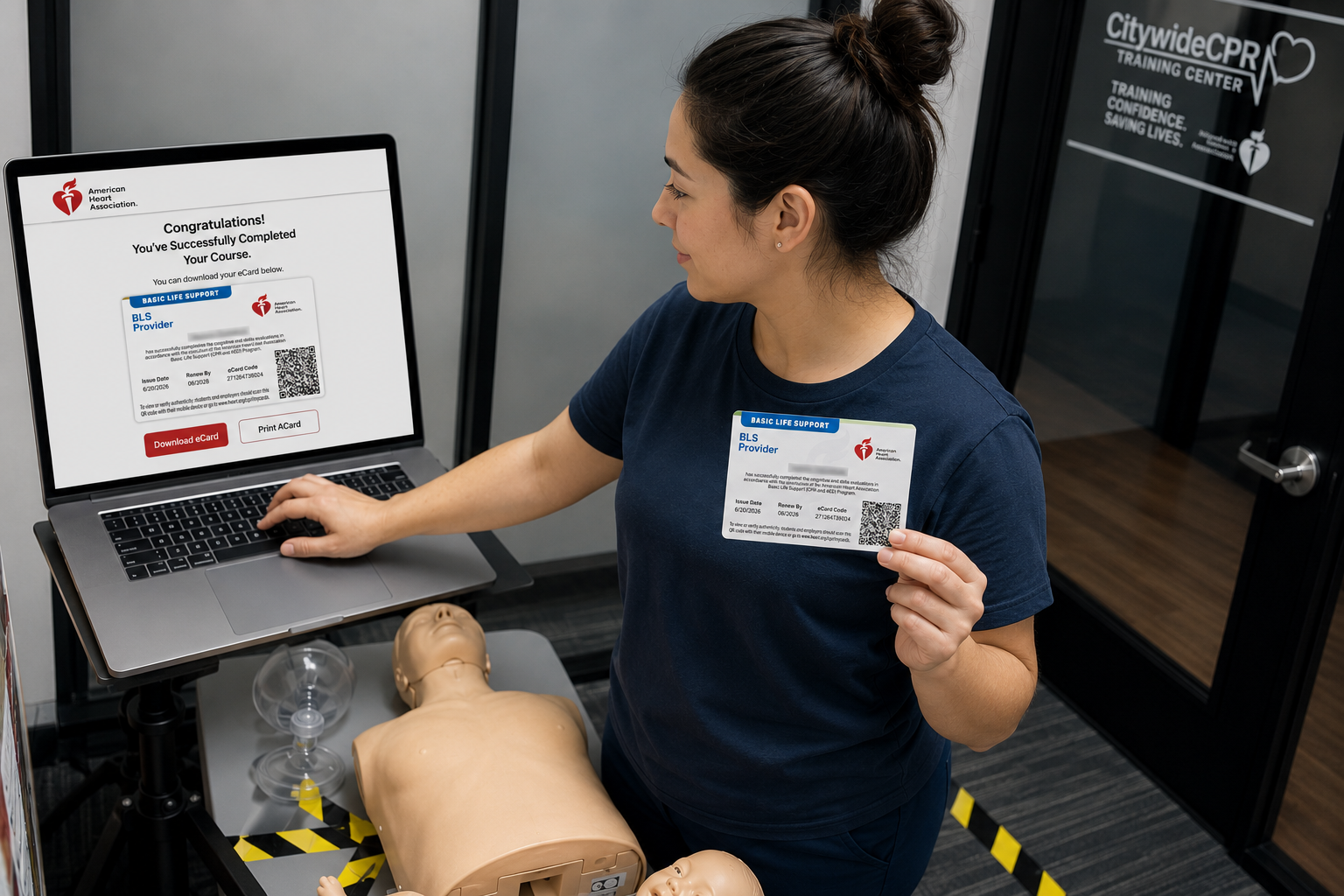
Infant CPR is an important component of the American Heart Association HeartCode BLS eLearning course. Healthcare professionals learn how to recognize life-threatening emergencies in infants, provide high-quality CPR, and respond confidently during pediatric emergencies. This guide supplements—but does not replace—the official American Heart Association course materials.
Infant CPR is performed when an infant experiences cardiac arrest or another life-threatening emergency requiring immediate resuscitation. During the HeartCode BLS eLearning course, students learn how infant CPR differs from adult CPR while emphasizing patient assessment, high-quality compressions, effective ventilations, and AED concepts appropriate for pediatric patients.
Healthcare professionals commonly requiring BLS certification include:
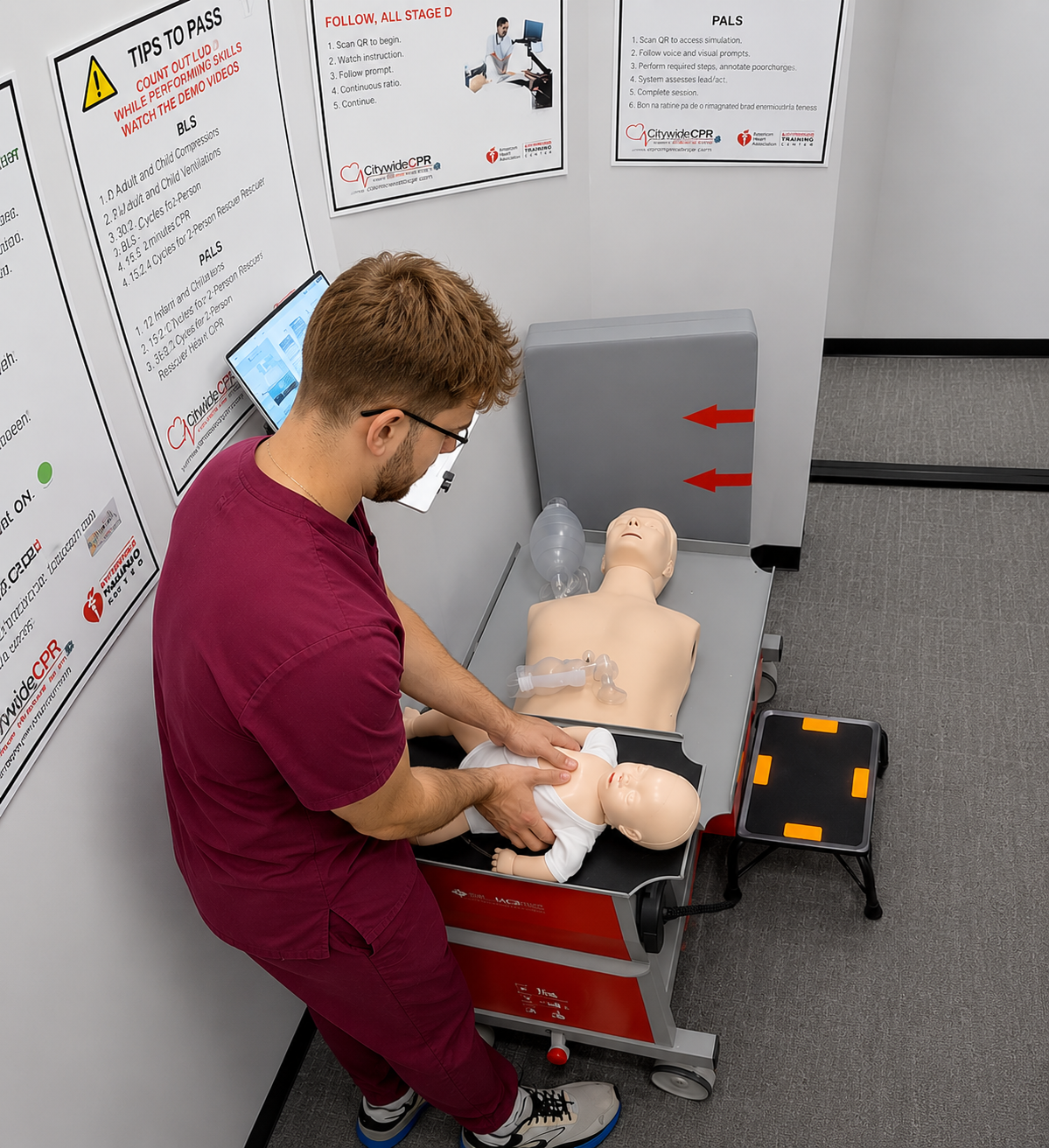
The HeartCode BLS eLearning course introduces the concepts needed to perform high-quality infant CPR while following current American Heart Association recommendations.
Topics commonly covered include:
Reviewing infant CPR concepts before beginning the HeartCode BLS eLearning course can help reinforce pediatric emergency response principles. The in-person BLS skills session focuses on demonstrating high-quality CPR skills.
American Heart Association BLS certification is typically valid for two years.
BLS certification is intended for healthcare professionals and healthcare students who may respond to medical emergencies requiring CPR and AED use.
Yes. BLS is designed for healthcare professionals and includes high-quality CPR, AED use, team dynamics, and emergency response concepts taught during the HeartCode BLS eLearning course.
Yes. Students complete the HeartCode BLS eLearning course before attending the in-person skills session, which focuses on demonstrating high-quality CPR skills.