Healthcare organizations face a common challenge: maintaining CPR competency while minimizing time away from patient care. Coordinating staff schedules, sending employees to off-site training centers, and maintaining compliance can be difficult, especially for organizations with multiple locations or limited staffing.
The RQI-P GO Simulation Station provides a portable solution that brings American Heart Association CPR skills verification directly to your facility. Now offered nationwide through Citywide CPR, this mobile simulation system allows hospitals, clinics, EMS agencies, surgical centers, and other organizations to complete onsite BLS, ACLS, PALS, Heartsaver CPR AED, and Heartsaver First Aid CPR AED skills verification while reducing travel and maximizing convenience.
What Is the RQI-P GO Simulation Station?
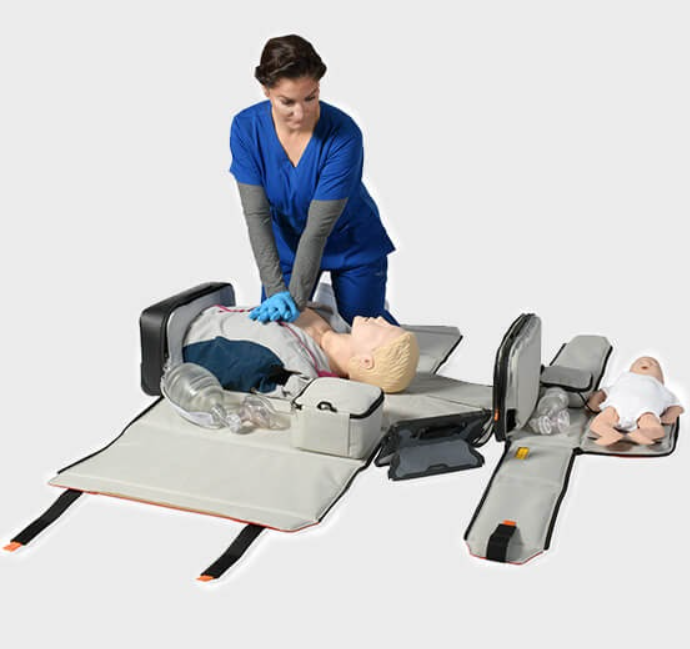
The RQI-P GO Simulation Station is a portable CPR simulation system designed to provide the same advanced training capabilities as a traditional stationary RQI Simulation Station while offering significantly greater flexibility.
Unlike a permanent training station, the GO Simulation Station is lightweight and easily transported between facilities. It can be used on a table or directly on the floor without requiring a dedicated cart or permanent installation.
This portability allows healthcare organizations to bring CPR competency verification directly to employees rather than requiring employees to travel to a centralized training location.
Who Benefits from Mobile CPR Skills Verification?
The portable design makes the RQI-P GO Simulation Station especially valuable for organizations with distributed locations or employees who have limited access to centralized training facilities.
Common organizations that benefit include:
- Hospitals with satellite campuses
- Large outpatient clinics
- Stand-alone emergency departments
- Ambulatory surgery centers
- Critical access hospitals
- EMS agencies
- Fire departments
- Public safety organizations
- Healthcare systems with multiple campuses
- Government healthcare facilities
Instead of coordinating travel to a separate training center, staff members can complete their required CPR skills verification onsite, allowing organizations to reduce scheduling challenges while supporting ongoing competency.
Onsite Training for BLS, ACLS, PALS, and Heartsaver Courses
Citywide CPR now offers nationwide onsite training using the RQI-P GO Simulation Station for organizations seeking a convenient, professional training experience.
Available onsite programs include:
- American Heart Association BLS Certification
- American Heart Association ACLS Certification
- American Heart Association PALS Certification
- Heartsaver CPR AED
- Heartsaver First Aid CPR AED
Whether your organization needs certification for healthcare providers or workplace responders, onsite training helps reduce disruptions while maintaining high educational standards.
Why Low-Dose, High-Frequency Training Improves CPR Skills
Traditional CPR training often occurs every two years, making it difficult for providers to retain psychomotor skills over long periods.
The RQI learning model supports low-dose, high-frequency practice, allowing participants to refresh their CPR skills through shorter, more frequent training sessions. This educational approach helps reinforce proper compression technique, ventilation quality, and other critical CPR skills through regular practice instead of relying solely on infrequent recertification.
Frequent reinforcement helps healthcare providers remain more confident and better prepared to respond during real patient emergencies.
Real-Time Feedback Helps Improve Performance
One of the most valuable features of the RQI-P GO Simulation Station is its ability to provide immediate performance feedback during CPR practice.
Using advanced simulation technology, participants receive real-time coaching on important CPR quality metrics, including:
- Compression depth
- Compression rate
- Chest recoil
- Ventilation quality
- Overall CPR performance
Immediate feedback allows learners to make corrections during training, helping reinforce proper technique and build confidence before responding to actual emergencies.
Simplified Compliance and Training Management
Managing CPR certification across large healthcare organizations can be time-consuming.
The RQI platform provides reporting tools that allow organizations to monitor participation, compliance, and CPR competency across individual providers and entire departments. Learning management capabilities can also support integration with compatible organizational education platforms, making ongoing training administration more efficient.
For healthcare leaders responsible for maintaining CPR compliance, having centralized reporting can simplify workforce planning and certification management.
Why Organizations Choose Citywide CPR for Onsite Training
Citywide CPR is expanding nationwide onsite training options by offering the portable RQI-P GO Simulation Station to healthcare organizations and employers.
Benefits include:
- Onsite training at your facility
- Nationwide availability
- Flexible scheduling
- Reduced employee travel
- Professional setup and support
- American Heart Association certification programs
- Portable simulation technology
- Training for healthcare providers and workplace responders
Whether your organization has one location or dozens of satellite facilities, Citywide CPR can help bring high-quality CPR training directly to your team.
Frequently Asked Questions
What is the RQI-P GO Simulation Station?
The RQI-P GO Simulation Station is a portable CPR simulation system that allows organizations to complete onsite CPR skills verification using advanced simulation technology.
Which courses can be delivered using the GO Simulation Station?
Citywide CPR offers onsite training for American Heart Association BLS, ACLS, PALS, Heartsaver CPR AED, and Heartsaver First Aid CPR AED programs.
Who should consider onsite CPR training?
Hospitals, healthcare systems, outpatient clinics, EMS agencies, fire departments, surgery centers, critical access hospitals, businesses, and organizations with multiple employees often benefit from onsite training.
Does onsite training reduce employee travel?
Yes. One of the primary advantages of the portable GO Simulation Station is bringing CPR skills verification directly to your facility instead of requiring staff to travel.
How do we schedule onsite training?
Organizations can contact Citywide CPR to discuss onsite training needs, available certification programs, and scheduling options.
Conclusion
The RQI-P GO Simulation Station makes it easier for healthcare organizations to maintain CPR competency while minimizing travel and reducing scheduling challenges. By bringing advanced simulation technology directly to hospitals, clinics, EMS agencies, surgery centers, and other facilities, organizations can provide high-quality American Heart Association training where employees work.
As Citywide CPR expands onsite training nationwide, more organizations will have access to portable CPR skills verification for BLS, ACLS, PALS, Heartsaver CPR AED, and Heartsaver First Aid CPR AED programs. This flexible approach helps support ongoing competency while allowing healthcare teams to spend more time focused on patient care.
Bring American Heart Association CPR training directly to your organization with Citywide CPR’s RQI-P GO Simulation Station.
Whether your team needs BLS Certification, ACLS Certification, PALS Certification, Heartsaver CPR AED, or Heartsaver First Aid CPR AED, Citywide CPR offers flexible onsite training nationwide using portable simulation technology.
To learn more about scheduling onsite training for your healthcare facility, business, school, or organization, visit:
https://www.citywidecpr.com/onsitetraining/