When someone experiences sudden cardiac arrest, every second matters. High-quality CPR helps maintain blood flow to the brain and vital organs, but early defibrillation with an Automated External Defibrillator (AED) is often the treatment needed to restore a normal heart rhythm.
That’s why American Heart Association (AHA) BLS Certification teaches healthcare professionals not only how to perform effective CPR but also how to recognize when an AED should be used, operate it safely, and minimize interruptions to chest compressions. Together, CPR and early defibrillation provide the best opportunity to improve survival during cardiac emergencies.
What Is an Automated External Defibrillator (AED)?
An Automated External Defibrillator, or AED, is a portable medical device designed to analyze a person’s heart rhythm and determine whether a shock is needed to treat certain life-threatening cardiac arrhythmias.
AEDs are designed to provide clear voice and visual prompts, helping trained rescuers deliver lifesaving care quickly and safely. While AEDs are commonly found in hospitals, clinics, schools, airports, fitness centers, and public buildings, healthcare professionals must know how to integrate AED use into a coordinated emergency response.
American Heart Association BLS Certification ensures participants understand both the technology and the proper sequence of care during cardiac arrest.
Why CPR and AED Use Work Together
CPR and defibrillation are most effective when performed together as part of the Chain of Survival.
Chest compressions circulate oxygen-rich blood to vital organs while the AED analyzes the patient’s heart rhythm. If a shockable rhythm is detected, the AED delivers a controlled electrical shock that may restore a normal heartbeat.
Healthcare professionals are trained to minimize pauses in CPR while preparing and operating the AED. Reducing interruptions helps maintain blood flow and supports better patient outcomes during resuscitation.
Learning this coordinated approach is a fundamental component of American Heart Association BLS Training.
What You’ll Learn About AEDs During BLS Certification
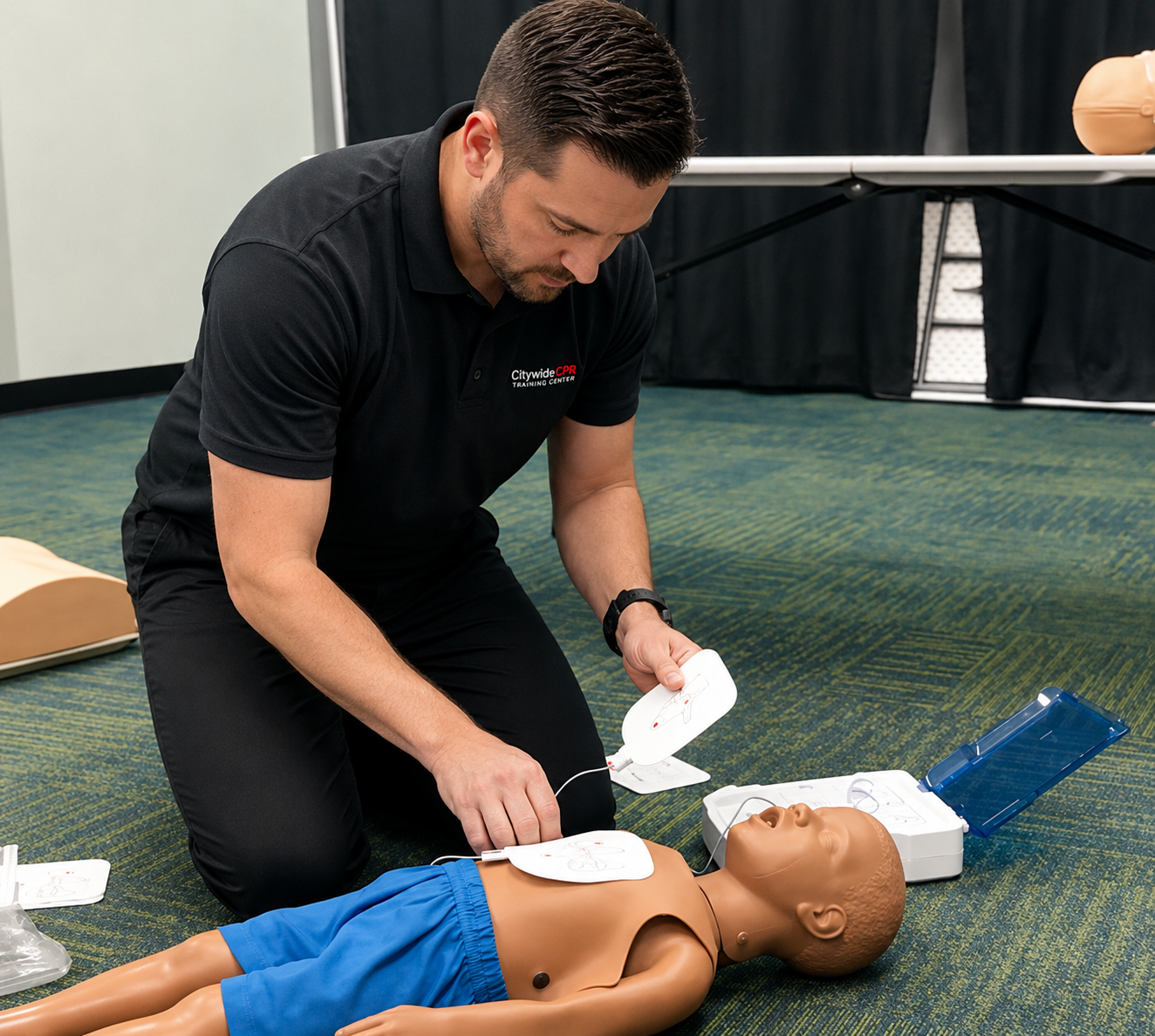
American Heart Association BLS Certification includes hands-on practice using AED trainers and simulation equipment.
Participants learn how to:
- Recognize when an AED should be used.
- Safely power on and operate the device.
- Correctly place AED pads.
- Follow voice prompts and safety precautions.
- Coordinate CPR with AED analysis.
- Minimize interruptions during chest compressions.
- Resume CPR immediately after a shock or “no shock advised” message.
Practicing these skills during a realistic CPR skills session helps healthcare professionals build confidence before responding to actual patient emergencies.
Who Benefits from AED Training?
AED training is valuable for virtually every healthcare professional who may respond to a cardiac emergency.
This includes:
- Nurses
- Physicians
- EMS professionals
- Respiratory therapists
- Medical assistants
- Dental professionals
- Healthcare students
- Allied health providers
Whether working in a hospital, outpatient clinic, dental office, surgery center, or long-term care facility, understanding proper AED use is an important part of delivering safe, effective patient care.
Building Confidence Through Hands-On Practice
Reading about AEDs is helpful, but confidence comes from hands-on experience.
During Citywide CPR’s American Heart Association-compliant skills sessions, participants practice using AED trainers alongside CPR manikins in realistic healthcare scenarios. Learners develop the muscle memory needed to respond efficiently while receiving objective feedback on CPR performance.
This practical experience prepares healthcare professionals to remain calm, communicate effectively, and provide high-quality care during real emergencies.
Why Healthcare Professionals Choose Citywide CPR
Citywide CPR makes earning and renewing certification convenient by offering flexible daily appointments at locations across the country.
Healthcare professionals benefit from:
- American Heart Association BLS Certification
- ACLS Certification
- PALS Certification
- CPR Renewal
- Flexible scheduling
- Self-guided CPR skills sessions
- American Heart Association-compliant simulation technology
- Same-Day AHA eCards after successful completion
Whether you’re entering healthcare, renewing your certification, or preparing for clinical rotations, Citywide CPR provides convenient, evidence-based training designed around your schedule.
Frequently Asked Questions
Why is AED training included in BLS Certification?
Because early defibrillation is one of the most important treatments for certain cardiac arrest rhythms. Healthcare professionals must know how to safely operate an AED while providing high-quality CPR.
Do I practice using an AED during my skills session?
Yes. American Heart Association BLS Certification includes hands-on AED practice using training equipment and simulation technology.
Can an AED be used by healthcare professionals and trained responders?
Yes. AEDs are designed to provide voice prompts that guide rescuers while helping ensure safe operation.
Does using an AED replace CPR?
No. CPR and AED use work together. Chest compressions should continue with minimal interruptions while the AED analyzes the patient’s heart rhythm.
How often should healthcare professionals renew their AED training?
AED skills are reinforced during regular American Heart Association BLS Renewal to help healthcare professionals stay current with evidence-based emergency cardiovascular care guidelines.
Conclusion
Effective cardiac arrest response depends on more than performing high-quality CPR. Knowing how to safely and efficiently operate an Automated External Defibrillator is another critical skill every healthcare professional should possess.
American Heart Association BLS Certification combines CPR and AED training to prepare healthcare professionals for real-world emergencies. Through regular practice and CPR Renewal, providers strengthen the skills and confidence needed to deliver lifesaving care when every second counts.
Ready to strengthen your CPR and AED skills?
Citywide CPR offers American Heart Association BLS Certification, ACLS Certification, PALS Certification, CPR Renewal, flexible daily appointments, and Same-Day AHA eCards at convenient locations nationwide.
Register today and gain the confidence to respond effectively during your next patient emergency. Locate us.