PALS EDUCATIONAL GUIDE
Defibrillation vs. Cardioversion in PALS
Review the differences between defibrillation and synchronized cardioversion before beginning your HeartCode PALS eLearning course.

Review the differences between defibrillation and synchronized cardioversion before beginning your HeartCode PALS eLearning course.
Defibrillation and synchronized cardioversion are important concepts introduced during the American Heart Association HeartCode PALS eLearning course. Healthcare professionals learn how these interventions fit into pediatric emergency cardiovascular care, when they may be considered, and why patient assessment remains essential. This guide supplements—but does not replace—the official American Heart Association course materials.
Whether you are becoming ACLS certified for the first time or renewing your certification, understanding what to expect can help you feel more confident before your course.
Defibrillation is introduced during the HeartCode PALS eLearning course as an intervention that may be considered for specific pediatric cardiac rhythms. Students learn how rhythm recognition, patient assessment, and current American Heart Association recommendations guide clinical decision-making during pediatric emergencies.
The course emphasizes recognizing emergencies, communicating effectively with a healthcare team, and applying current resuscitation principles during simulated patient scenarios.
Healthcare professionals commonly requiring PALS certification include:
During the HeartCode PALS eLearning course, healthcare professionals also learn how synchronized cardioversion differs conceptually from defibrillation. Students review how patient assessment, rhythm recognition, and clinical presentation influence treatment decisions while following current American Heart Association educational principles.
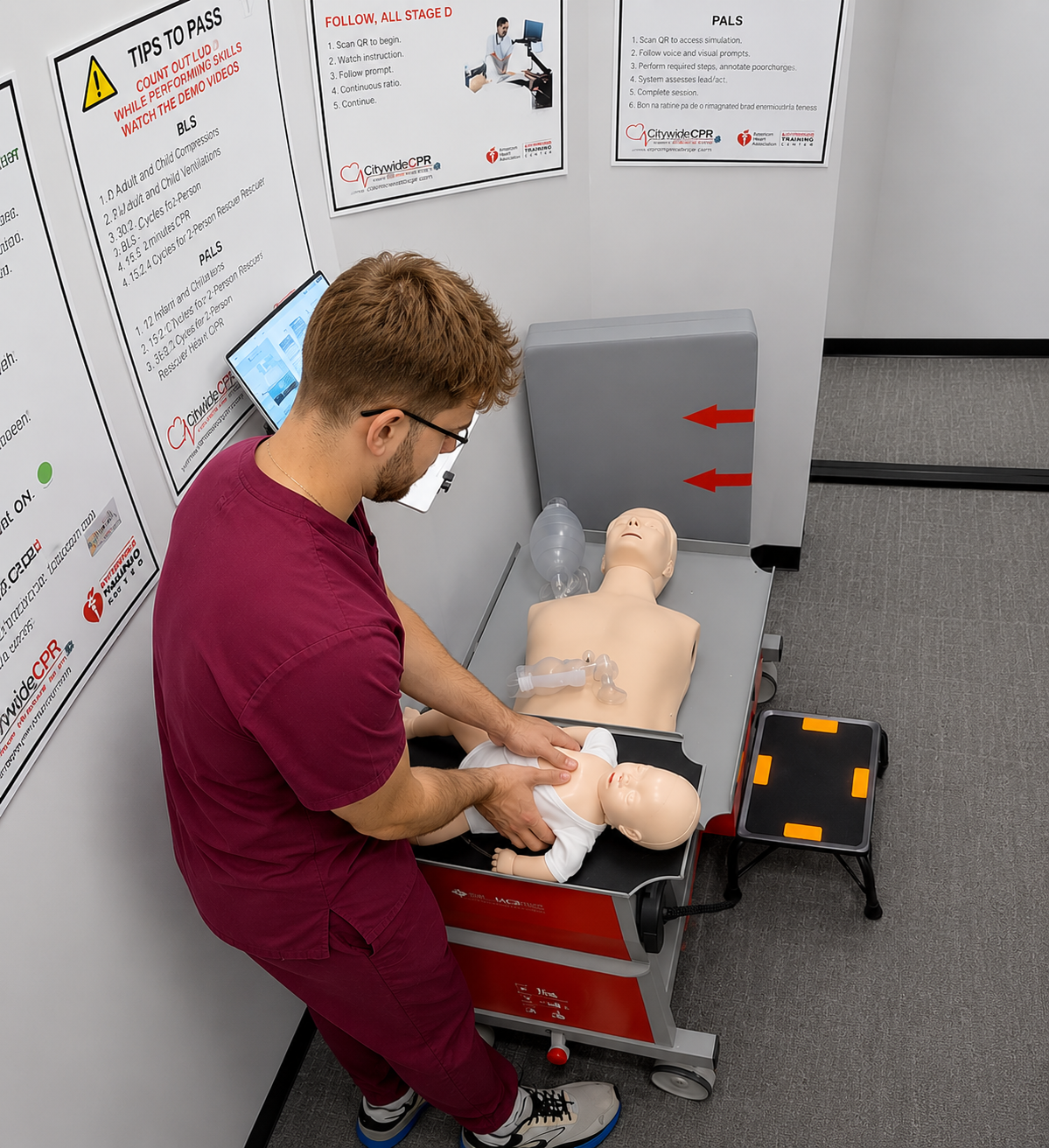
Reviewing the differences between defibrillation and synchronized cardioversion before beginning the HeartCode PALS eLearning course can help reinforce pediatric emergency cardiovascular care concepts. The in-person PALS skills session focuses on demonstrating high-quality CPR skills rather than advanced treatment concepts.
American Heart Association PALS certification is typically valid for two years.
PALS certification is intended for healthcare professionals who care for infants and children in emergency or critical care settings.
Yes. Students complete the HeartCode PALS eLearning course before attending the in-person skills session, which focuses on demonstrating high-quality CPR skills.
Yes. Students complete the HeartCode PALS eLearning course before attending the in-person skills session, which focuses on demonstrating high-quality CPR skills.